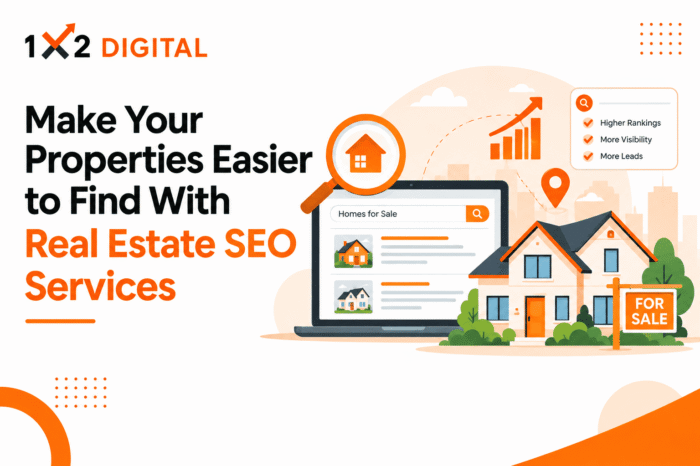
Make Your Properties Easier to Find With Real Estate SEO Services
- September 14, 2026
Introduction
Buying a property often starts long before a buyer visits a site or speaks to an agent. Today, people search online for apartments, commercial spaces, plots, builders, and investment opportunities before making their next move. If your properties do not appear when potential buyers are searching, you may be losing valuable enquiries to competitors who are easier to find.
This is where Real Estate SEO Services can make a meaningful difference. Instead of relying only on paid promotions or property portals, SEO helps real estate businesses build long-term visibility for the searches that matter to their market.
A successful real estate SEO strategy is not only about ranking for property-related keywords. It also involves creating useful property pages, improving local visibility, answering buyer questions, and making it easy for visitors to enquire. When these elements work together, SEO can support both search visibility and real estate lead generation.
Why Search Visibility Matters in Real Estate
Real estate is highly competitive, and buyers rarely search with just one broad term. Their searches can include a location, property type, budget, amenities, or even a specific project.
For example, someone may search for a residential property in a particular city, while another buyer may look for commercial property near a business district. These different searches represent different stages of buying intent.
A strong Real Estate SEO strategy helps your website become visible across these relevant searches. More importantly, it allows your business to attract people who are already looking for the type of property or service you provide.
The objective is not simply to bring more visitors. The real goal is to bring the right visitors—people who are more likely to enquire, schedule a visit, or eventually become customers.
Build a Website Around How Property Buyers Search
A real estate website should do more than display property photographs and contact details. It should answer the questions potential buyers are already asking.
Property pages should provide useful information such as:
- Location and nearby landmarks
- Property type and configuration
- Available amenities
- Price or pricing information where appropriate
- Project highlights
- Frequently asked questions
- Clear enquiry or contact options
Location-focused pages can also be valuable when a business operates across multiple areas. Instead of creating thin pages simply to target different locations, each page should provide genuinely useful information about the property market, locality, or available offerings.
For example, a residential developer may need dedicated pages for individual projects, locations, configurations, and amenities. A commercial property business may need content around office spaces, business districts, connectivity, and investment considerations. The page structure should reflect what potential buyers and investors actually search for.
This creates a better experience for visitors while giving search engines clearer context about what the business offers.
Turn Property Searches Into Qualified Leads
Visibility is only one part of the equation. A real estate website also needs to convert that visibility into enquiries.
This is where SEO and lead generation work together.
Imagine a potential buyer finds your website after searching for a property in their preferred location. If the page clearly explains the project, answers important questions, provides relevant visuals, and makes it easy to request more information, the visitor has a natural reason to take the next step.
Useful conversion optimisation elements can include:
- Request-a-call forms
- Schedule-a-site-visit options
- WhatsApp enquiry buttons
- Downloadable project information
- Clear contact details
- Location and directions
- Strong but relevant calls to action
The key is to make the next step simple. A visitor should not have to search through several pages just to understand how to contact the business.
SEO can support lead generation by bringing relevant visitors to the right property pages. When those pages provide useful information and offer simple ways to enquire, visitors have a clearer path from searching for a property to contacting the business. This makes SEO more than a traffic-generation activity; it can also support the lead-generation process.
Combine SEO With Real Estate Digital Marketing
SEO works best when it is part of a broader digital strategy rather than treated as an isolated activity.
For real estate businesses, digital marketing can help attract potential buyers at different stages, from initial property research to enquiry and site visits. Someone may first discover a project through search, compare options through website content, and later contact the business after finding the information they need.
Real Estate Digital Marketing can bring together organic search, paid campaigns, social media, content, remarketing, and conversion optimisation. Each channel can support a different stage of the buyer journey.
For example, Google Ads targeting may help promote a newly launched project quickly, while SEO can build organic visibility around property-related searches over time. Social media can create awareness, while useful website content can help potential buyers research their options.
The advantage of combining these activities is that your brand can stay visible at multiple points in the decision-making process instead of depending on one source of traffic.
Create Content That Helps Buyers Make Decisions
Real estate content should not exist only to insert keywords into a page. It should help people make better property decisions.
A developer, broker, or real estate company can create content around topics such as:
- How to choose the right property location
- Questions to ask before buying a home
- Factors that influence property value
- What buyers should check before a site visit
- Differences between residential and commercial investments
- Local area guides
- Property buying considerations for first-time buyers
This type of content can attract users earlier in their research journey. When the information is genuinely useful, the same visitors may later explore your property listings or contact your team.
What Makes an Effective Real Estate SEO Strategy?
There is no single SEO activity that can transform a real estate website overnight. Sustainable results usually come from several elements working together.
A practical real estate SEO process can be broken into several important steps:
Search intent and keyword research: Understand what potential buyers, tenants, and investors actually search for, including property types, locations, budgets, and specific requirements.
Property-page optimisation: Make property pages useful and relevant by providing clear information about location, configuration, amenities, pricing where appropriate, images, and enquiry options.
On-page optimisation: Make page titles, headings, content, images, and internal links relevant to the target search.
Local SEO: Improve visibility for searches connected to specific cities, neighbourhoods, and local property markets.
Technical SEO: Make the website easy for users and search engines to access, crawl, and understand.
Helpful content: Publish useful guides and answers that help people research and compare property options.
Authority building: Build relevant and trustworthy links that can strengthen the website’s authority.
Measurement: Track organic traffic, relevant enquiries, conversions, and other business outcomes instead of focusing only on rankings.
Choosing the Right Real Estate Marketing Companies
Not every agency approaches real estate marketing in the same way. When evaluating Real Estate Marketing Companies, businesses should look beyond promises of quick rankings. The search for the best digital marketing agency in Ahmedabad should focus on the agency’s understanding of the market, business goals, and ability to deliver measurable results.
A capable SEO agency in Rajkot should understand the relationship between search visibility and actual business results. They should be able to identify the right audience, analyse competitors, understand search intent, improve website performance, and connect marketing activity with measurable outcomes.
For real estate businesses, this industry understanding matters because ranking for a high-volume keyword is not necessarily valuable if the traffic does not generate relevant enquiries.
The better question is not simply, “How quickly can we rank?”
It is:
“Can this strategy help us become more visible to the people who are genuinely looking to buy, rent, invest, or enquire?”
Make SEO a Long-Term Property Growth Strategy
Real estate businesses compete in a market where trust, location, visibility, and timing all influence decisions. A strong search presence can help your properties reach potential buyers when they are actively researching their options.
Real Estate SEO Services provide a way to build that visibility systematically—from understanding buyer searches and improving property pages to creating useful content and turning organic visitors into enquiries.
The goal is not to chase every search. It is to build a website that consistently attracts the right audience and gives them a clear reason to take the next step.
For a real estate brand looking beyond short-term campaigns, that can become a valuable foundation for sustainable digital growth.
FAQs
1. What is real estate digital marketing?
Real estate digital marketing refers to using online channels such as SEO, paid advertising, social media, content marketing, and other digital strategies to promote properties and attract potential buyers, tenants, or investors. It helps real estate businesses reach people while they are researching properties online and can support both visibility and lead generation.
2. How to generate real estate leads?
Real estate leads can be generated through SEO, paid advertising, social media, property listings, useful content, local search, and referral marketing. The key is to target people searching for specific properties, locations, budgets, or investment opportunities and give them an easy way to enquire, schedule a site visit, or request more information.
3. How much does real estate SEO cost?
The cost of real estate SEO varies depending on factors such as website size, target locations, competition, number of property pages, technical requirements, and the level of ongoing content and optimisation needed. A small local business may have different requirements from a large real estate company targeting multiple cities. It is better to determine the SEO scope and goals before deciding on a suitable budget.
4. How to do SEO for real estate?
Real estate SEO starts with understanding the searches potential buyers, tenants, and investors use. Businesses can improve their visibility by targeting relevant property and location-based keywords, creating useful property pages, improving on-page and technical SEO, strengthening local visibility, publishing helpful content, and building relevant website authority. The strategy should focus on attracting relevant visitors and turning them into enquiries rather than targeting rankings alone.
5. What are the best SEO strategies for real estate?
Effective real estate SEO can include location-focused keyword research, optimised property pages, local SEO, technical SEO, useful content, internal linking, relevant authority building, and clear conversion paths. The right strategy depends on the property type, target locations, competition, and business goals. The focus should be on attracting relevant search traffic and turning it into genuine enquiries.
More from our blog
See all posts