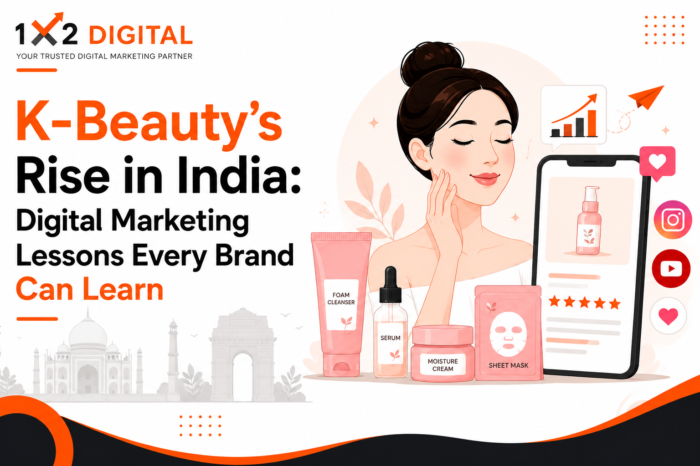
K-Beauty’s Rise in India: Digital Marketing Lessons Every Brand Can Learn
- July 24, 2026
Introduction
Five years ago, ask an average Indian shopper about “Centella Asiatica” or “PDRN,” and you’d likely get a blank stare. Today, these words show up in comment sections, product reviews, and everyday skincare shelf-talk from Mumbai to Ahmedabad.
Korean beauty — better known as K-Beauty — has moved from a niche import to a mainstream shelf staple in Indian skincare routines. This shift didn’t happen because Korean brands simply “arrived” in India. It happened because they understood something most beauty brands still get wrong: people don’t want to be sold a cream, they want to be taught about their own skin.
At 1into2 Digital, we track shifts like this closely because they reveal something bigger than a beauty trend — they reveal how modern audiences decide who to trust online.
The Problem K-Beauty Actually Solved
Indian skin deals with a specific combination of stressors — harsh sun, humidity swings, pollution, and long commutes that leave skin dehydrated by evening.
Most local skincare marketing historically addressed these issues with quick-fix language:
- Instant whitening
- Overnight glow
- One-wash spot removal
K-Beauty entered with a different premise altogether — skin health as a long-term project, not a same-day fix. Barrier repair, gentle actives, layered hydration, and daily SPF became the new vocabulary, replacing “instant results” with “consistent care.”
At 1into2 Digital, we see this as a masterclass in repositioning — solving the same customer problem with an honesty-first message instead of an urgency-first one.
Content Did What Advertising Couldn’t
Almost none of K-Beauty’s growth in India came from television or print advertising. It came from creators explaining a 10-step routine step by step, comparing two serums side by side, or simply filming their skin texture change over eight weeks.
This content typically includes:
- Ingredient breakdowns explained in simple language
- Before-and-after documentation over weeks, not days
- Side-by-side product comparisons for specific skin concerns
- Routine-building guides for beginners
None of this asks for a purchase directly. It teaches first — and a viewer who understands why an ingredient helps their specific concern is already convinced before they open a shopping app.
At 1into2 Digital, we encourage brands to borrow this exact pattern: audiences trust brands that explain more and push less.
Community Did the Selling, Not the Brand
Unlike traditional beauty marketing, where the brand controls the narrative through polished campaigns, K-Beauty’s growth in India has largely been community-authored.
Common community-driven content includes:
- Skin-type specific recommendations from real users
- Dupe and price comparisons across brands
- City-specific advice, like “what worked for oily skin in Mumbai humidity”
- Honest reapplication and repurchase updates months later
This is user-generated proof, and it carries more weight than any single brand claim ever could.
At 1into2 Digital, we help brands actively create space for this kind of conversation, instead of only broadcasting a one-way message.
Packaging Became Part of the Marketing
Long before a customer applies the product, they experience it visually — minimalist bottles, soft pastel tones, ingredient callouts printed right on the front, and QR codes linking to usage tutorials.
A few design choices consistently stand out:
- Ingredient names printed boldly, so the product educates on the shelf itself
- Consistent visual language across a brand’s entire range
- Multi-language labelling that respects regional buyers
- Sample-sized formats that lower the barrier to a first purchase
For Indian consumers who are increasingly ingredient-conscious, this transparency at the packaging level builds trust before a single review is even read.
At 1into2 Digital, we remind brands that design is marketing too — it starts communicating long before a word of copy is read.
Pricing Played the Middle Ground, and It Worked
One quiet reason K-Beauty scaled so fast in India is how it positioned itself in the middle — priced above mass-market local brands, but noticeably below premium European skincare.
This “accessible premium” zone matters more than it looks:
- It let first-time buyers experiment without a heavy financial commitment
- It created room for a “starter kit” mentality — try one serum, then build a routine over months
- It avoided being labelled either “cheap” or “unaffordable,” two tags that kill curiosity equally fast
At 1into2 Digital, we often see brands over-index on being the cheapest or the most premium. K-Beauty’s rise suggests there’s real opportunity in owning the middle, if the value story is told clearly.
Where Social Media Marketing Fits In
A large part of why this content spreads so effectively comes down to platform-native storytelling — short videos built for Reels and Shorts, designed to be watched, saved, and shared, not repurposed ads squeezed into a vertical frame.
This is exactly the gap 1into2 Digital’s Social Media Marketing service is built to close. Instead of treating Instagram or YouTube as another billboard, our approach focuses on:
- Creating platform-native content designed to be watched till the end, not scrolled past
- Building a content calendar around what an audience is already curious about, not only product promotions
- Using formats that encourage saves and shares, since a saved Reel keeps working long after it’s posted
- Tracking engagement patterns to double down on what genuinely resonates with a specific audience
For skincare, wellness, or any considered-purchase category, this format-first, engagement-led thinking is often the real difference between a post that gets ignored and one that drives actual product discovery.
A large part of why K-Beauty content spreads so effectively comes down to platform-native storytelling. Instead of posting traditional advertisements, brands use social media marketing to increase brand awareness by creating engaging Reels, Shorts, and educational posts that audiences genuinely enjoy watching and sharing.
At 1into2 Digital, our Social Media Marketing service follows the same approach. We create audience-focused campaigns and use Instagram marketing for skincare brands through creativeroduct discovery.
What Every Brand Can Learn From K-Beauty’s Rise
K-Beauty’s success in India isn’t really a skincare story — it’s a trust story. Ingredients mattered, yes, but ingredients alone don’t explain why a once-niche category is now a shelf staple across metro and non-metro cities alike.
Key takeaways for any brand include:
- Educate before you sell, in language people actually understand
- Let community conversation do the convincing, not just brand messaging
- Treat packaging and design as part of the pitch, not an afterthought
- Position value clearly instead of competing only on price
- Show up on social platforms in the native format that platform rewards
- Build for repeat purchase from day one, not just the first sale
These are the same principles 1into2 Digital applies when helping businesses build long-term digital presence rather than one-off campaigns.
Final Thoughts
K-Beauty’s journey in India proves that a category doesn’t need the loudest advertising to become the most trusted one. By combining honest education, community trust, thoughtful design, and smart positioning, Korean skincare brands built something far stronger than a passing trend.
At 1into2 Digital, we help brands apply these same principles to their own growth — whether that means sharper social media storytelling, a clearer value proposition, or content that earns trust before it earns a sale. Whatever your industry, the underlying formula remains the same: teach first, sell second.
FAQs
1. Why has K-Beauty become so popular among Indian consumers?
K-Beauty has gained popularity because it focuses on healthy skin, gentle ingredients, educational content, and consistent skincare routines rather than promising instant results. This approach has helped build trust among Indian consumers.
2. What role does digital marketing play in K-Beauty’s success?
Digital marketing has been a key growth driver for K-Beauty. Educational blogs, influencer collaborations, Instagram Reels, YouTube Shorts, and user-generated content have helped brands reach and engage millions of potential customers.
3. How does content marketing help skincare brands grow?
Content marketing educates customers about skincare ingredients, routines, and product benefits. Informative content builds credibility, improves SEO rankings, increases organic traffic, and helps customers make confident purchasing decisions.
4. Why is community engagement important for modern brands?
Community engagement creates trust through genuine customer reviews, discussions, and shared experiences. Brands that encourage two-way conversations often build stronger customer loyalty and higher brand credibility.
5. Can businesses outside the beauty industry use K-Beauty’s marketing approach?
Absolutely. Any business can benefit by educating customers, creating valuable content, encouraging customer engagement, building trust, and maintaining a consistent brand identity across digital channels.
More from our blog
See all posts