From Showroom to Scroll: How Automotive Advertising Turns Attention Into Car Buyers
- October 8, 2026
Introduction
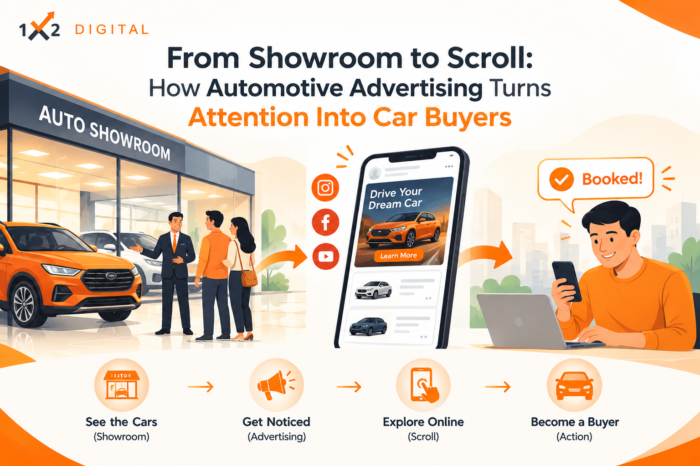
A car purchase rarely starts when a customer walks into a showroom.
Today, a buyer may first see a car on Instagram, search for its price on Google, watch a review on YouTube, compare different models, check features, read customer opinions, and only then contact a dealer. By the time the customer reaches the showroom, they may already know a lot about the car.
This has changed the way dealerships need to advertise.
Automotive Advertising is no longer only about putting an offer on a billboard or running a newspaper ad. It is about reaching potential buyers when they are researching, comparing, and deciding which car or dealer to choose.
But many dealerships face the same problem: they spend money on advertising, receive clicks or enquiries, but do not see enough serious buyers.
The problem is often not simply the advertising budget. The bigger question is whether the right message is reaching the right customer at the right stage of the buying journey.
Why Car Buyers Are Starting Their Journey Online
A customer interested in buying a car usually has many questions before making a decision.
They may want to know:
- Which model is right for their needs?
- What features does the car offer?
- What is the price?
- Which variant should they choose?
- Is there a better option from another brand?
- Where can they get a test drive?
- What offers or finance options are available?
- Which dealer should they contact?
Many of these questions can be searched online before a customer ever visits a showroom.
This means dealerships have an opportunity to become visible during the research stage through SEO instead of waiting for customers to arrive at the showroom.
A good advertising strategy should therefore help customers move from “I am looking” to “I want to know more” and finally to “I am ready to contact the dealer.”
The Real Problem With Many Automotive Ads
One common mistake is creating an advertisement only because the dealership wants to promote something.
For example, an ad may simply say that a particular car is available or that customers should visit the showroom.
But the customer may still have unanswered questions.
A person searching for a family car may care about space and practical features. Someone looking for a city car may have different priorities. Another customer may already know the model and only want to book a test drive.
If the same message is shown to everyone, the advertisement may not feel relevant.
Effective Auto Advertising starts with understanding what the customer is actually trying to solve.
Understanding the Car Buyer’s Journey
A potential buyer does not usually go from seeing one advertisement directly to purchasing a car.
There can be several steps in between.
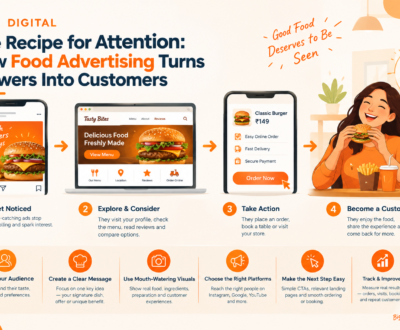
1. Awareness
The customer may not be actively looking for a specific dealer yet. They may simply be discovering a new SUV, electric vehicle, or upcoming model. At this stage, advertising should create awareness and interest.
2. Research
Now the customer starts looking for more information. They may compare models, variants, features, prices, reviews, and nearby dealers. The advertising message should provide useful information and a reason to continue the research.
3. Consideration
The customer has narrowed down their choices to a few models. At this point, dealership-specific information becomes more important. Customers may want to know about availability, test drives, offers, location, finance options, or other relevant details.
4. Action
The customer is ready to take the next step.
That action could be calling the dealership, submitting an enquiry, requesting information, or booking a test drive.
A strong advertising strategy considers these different stages instead of treating every customer the same way.
What Makes Automotive Advertising More Useful?
Good advertising should answer the customer’s next question.
If someone is discovering a car for the first time, a simple introduction may be enough.
If someone already knows the model, they may need a stronger reason to contact the dealership.
This means the advertisement, landing page, and enquiry process should work together.
For example:
Ad: Introduces the relevant car or offer.
Landing page: Gives the customer useful information.
Call-to-action: Makes the next step clear.
Follow-up: Helps the dealership continue the conversation.
When these parts are disconnected, advertising can generate attention without generating useful enquiries.
Why Creative Matters in Auto Advertising
Because cars are highly visual products, the images and videos used in advertising can strongly influence whether a customer stops to learn more.
However, a good automotive creative is not simply a beautiful picture of a car.
The customer should quickly understand what the advertisement is about.
Depending on the campaign, the creative may focus on:
- The car model
- A key feature
- A relevant offer
- A new launch
- A test-drive opportunity
- A dealership experience
- A specific customer need
The design should support the message rather than make the customer search for it.
Simple and clear communication is often more useful than putting too much information into one advertisement.
Car Dealer Advertising Should Sell the Next Step
A dealership does not always need to make the customer complete the entire purchase journey through one advertisement.
The immediate goal may simply be to get the right customer to take the next step.
For example, depending on the campaign, that could be:
- Explore the model
- Learn about a feature
- Contact the dealer
- Request more information
- Book a test drive
- Visit the showroom
This makes Car Dealer Advertising more focused.
Instead of asking every person to “Buy Now,” the dealership can give customers a relevant next action based on where they are in the buying journey.
What If Ads Get Clicks but Not Enquiries?
This is one of the most frustrating problems for dealerships.
An advertisement may receive attention and website visits, but very few people may actually contact the business.
Before assuming that the advertising is failing, the dealership should check the complete journey.
Check the message
Does the ad clearly explain why the customer should be interested?
Check the landing page
Does the page provide enough useful information, and does the landing page optimization support the customer in taking the next step?
Check the call-to-action
Is it obvious what the customer should do next?
Check the enquiry process
Is submitting an enquiry simple?
Check the follow-up
What happens after the enquiry is received?
A good advertising campaign cannot solve every problem if the customer experience after the click is confusing.
Why Targeting Matters in Automotive Advertising
Not everyone seeing a car advertisement is ready to buy that car.
Some people may simply be browsing. Others may be comparing models. Some may already be looking for a dealer.
This is why audience selection matters.
The advertising strategy should consider factors such as:
- Customer interests and needs
- Location
- Buying intent
- Type of vehicle
- Stage of the buying journey
- Previous interaction with the dealership
The exact targeting approach can change depending on the platform and campaign goal.
The important point is to avoid treating every online user as the same potential customer.
How Search Advertising Can Help Car Dealers
Search Engine Marketing can be useful when people are actively looking for automotive information or dealership-related services.
For example, someone searching for a particular car model, dealership, test drive, or automotive service may already have a clear need.
This creates an opportunity to show a relevant message when the customer is searching.
But the advertisement still needs to match the search intent.
If a person is looking for information and the ad only pushes a generic sales message, the campaign may not feel relevant.
How Social Media Advertising Supports Car Sales
Social platforms can help dealerships reach people through visual content, and effective social media marketing can help turn that attention into meaningful engagement.
Cars naturally work well with images and videos because customers often want to see the vehicle before visiting a showroom.
Social advertising can support different stages of the buying journey.
For example, a dealership may use content to introduce a model, explain a feature, show the vehicle from different angles, or encourage interested customers to take the next step.
The goal should not be to post only promotional content. Useful content can also help customers during their research process.
Why Remarketing Can Be Useful
Sometimes a customer visits a website or interacts with an advertisement but does not enquire immediately.
That does not necessarily mean they are no longer interested.
They may still be comparing options or waiting before making a decision.
Remarketing can help a dealership reconnect with people who have already interacted with its digital presence, depending on the platform, campaign setup, and applicable privacy requirements.
The important point is that follow-up advertising should remain relevant rather than repeatedly showing the same message without context.
Common Automotive Advertising Mistakes
Promoting the car without understanding the customer
A car can have many features, but customers may only care about the ones that matter to their specific needs.
Using the same advertisement everywhere
Different platforms and audiences may require different creative formats and messages.
Sending every click to the same page
A customer looking for a specific model may need a different landing experience from someone looking for a general dealership.
Focusing only on clicks
Clicks show that people interacted with an advertisement. They do not automatically mean that the campaign is generating serious buying enquiries.
Ignoring the follow-up process
A good lead can be lost if the customer does not receive a proper response after making an enquiry.
How an Automotive Advertising Agency Can Help
Managing automotive campaigns can become difficult when a dealership is handling multiple platforms, audiences, creatives, landing pages, and follow-ups.
An automotive advertising agency can help businesses plan and manage these activities based on their campaign goals, with businesses in Rajkot also able to explore the role of an advertising agency in Rajkot.
Depending on the business requirement, an agency may work on areas such as:
- Campaign planning
- Audience research
- Ad creative
- Search advertising
- Social media advertising
- Landing page recommendations
- Lead generation
- Campaign analysis
The important thing is not simply choosing an agency that says it can “run ads.”
A dealership should look for a team that understands the customer journey and can connect advertising activity with actual business goals.
What Should You Look for in Automotive Advertising Agencies?
If a dealership is comparing Automotive Advertising Agencies, it is useful to ask practical questions.
For example:
- How will you understand our target customers?
- How will you decide which platforms to use?
- What type of leads are we trying to generate?
- How will campaign performance be evaluated?
- How will you identify weak advertisements?
- What happens after a lead is generated?
- How will you improve campaigns over time?
These questions can help a dealership understand whether an agency is thinking beyond simply spending an advertising budget.
How to Build a Better Car Advertising Strategy
A practical strategy can start with a few simple steps.
Step 1: Understand the customer
Identify who the dealership wants to reach and what those customers are looking for.
Step 2: Define the campaign goal
Decide whether the campaign is focused on awareness, enquiries, test drives, showroom visits, or another specific action.
Step 3: Match the message to the audience
Use information that is relevant to the customer’s current need.
Step 4: Create a clear next step
Tell the customer exactly what they can do after seeing the advertisement.
Step 5: Make the online experience simple
The page or form customers reach should make it easy to understand the offer and take action.
Step 6: Track useful outcomes
Do not look only at clicks. Review the quality of enquiries and the actions that matter to the dealership.
Step 7: Improve based on results
Advertising should not be treated as a one-time activity. Campaigns can be reviewed and improved based on what customers respond to.
Automotive Advertising Is About the Whole Journey
A successful car advertising campaign does not begin and end with an advertisement.
A customer may move from social media discovery to search, website research, enquiry, and finally a showroom visit, with each stage influencing the final decision.
This is why Automotive Advertising should connect the advertisement with the rest of the customer journey. A strong creative may get attention, but useful information, a clear next step, and a good follow-up process help turn that attention into a real business opportunity.
Choosing the Right Digital Marketing Partner
For dealerships that want to strengthen their online presence, working with the right digital marketing team can make campaign management easier.
A digital marketing agency in Rajkot can help local automotive businesses plan digital campaigns based on their target audience and business goals.
Similarly, businesses looking for the best digital marketing agency in Ahmedabad should compare agencies based on their strategy, communication, relevant experience, reporting, and ability to understand the business—not just on promises of getting more clicks.
The right partner should be able to explain what the campaign is trying to achieve, how success will be measured, and what will be improved when results are not meeting expectations.
The way people buy cars has changed. A showroom is still an important part of the buying process, but the customer journey often starts much earlier online.
Final Thoughts
That is why modern Auto Advertising needs to do more than attract attention. It should help customers during their research, answer relevant questions, create a clear next step, and connect digital interactions with the dealership experience.
For car dealers, the goal is not simply to get more people to see an advertisement. The real goal is to reach the right people, give them a useful reason to engage, and make it easier for interested customers to move from a screen to a showroom.
When advertising, content, landing pages, and follow-up work together, a dealership has a stronger foundation for turning online attention into genuine buying opportunities.
FAQs
1. What is auto advertising?
Auto advertising means promoting cars, dealerships, or automotive services to attract potential buyers. It can include online ads, social media, search ads, and other advertising methods.
2. What are the different types of car advertising?
Different types of car advertising include search ads, social media ads, video ads, display ads, dealership promotions, and remarketing ads. These methods help car dealers reach people at different stages of the buying journey.
3. How can a car dealership generate leads?
Car dealerships can generate leads through search ads, social media advertising, useful website content, and remarketing. Clear offers, simple enquiry forms, and strong calls-to-action can also encourage interested buyers to contact the dealership or book a test drive.
4. What kind of advertising does a local car dealer use?
A local car dealer can use search ads, social media ads, video ads, display ads, local promotions, and remarketing to reach potential buyers. These methods can help dealers attract people who are researching cars and encourage them to make an enquiry or visit the showroom.
5. How to make a car advertisement?
To make a car advertisement, use a clear car image or video, highlight important features or offers, and keep the message simple. Add a clear call-to-action, such as “Book a Test Drive” or “Contact Us,” so interested customers know what to do next.
More from our blog
See all posts