Automotive Advertising: How to Turn Online Interest Into Real Car Sales
- October 8, 2026
Introduction
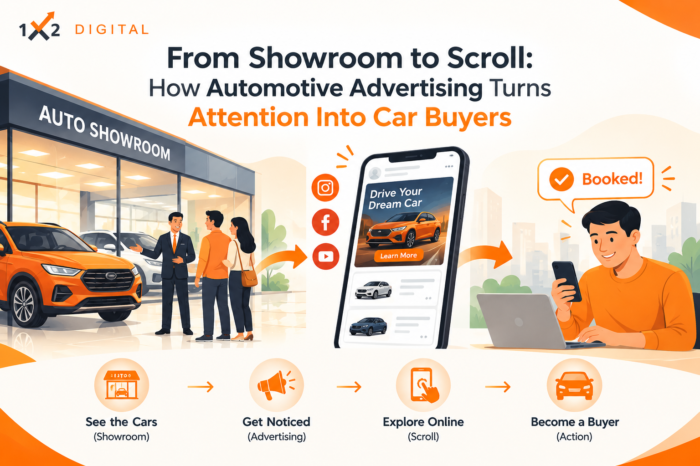
Buying a car is rarely an instant decision. Customers compare different models, check prices, explore features, watch vehicle reviews, and visit multiple dealership websites before choosing where to buy. During this process, they come across many advertisements, but only a few encourage them to take the next step.
For dealerships and automotive businesses, this creates an important challenge: attracting attention is not enough. Advertising should help potential buyers understand what makes a vehicle suitable for them and give them a clear reason to contact the dealership.
A well-planned Automotive Advertising strategy connects the right audience with the right vehicle through relevant messages, useful visuals, and convenient enquiry options. It also helps businesses understand which campaigns bring genuine sales opportunities instead of simply increasing website traffic.
In this guide, we will explore practical ways automotive businesses can improve their advertising, attract interested buyers, and turn online engagement into meaningful customer enquiries.
1. Understand What Makes Customers Consider a Car
Before creating advertisements, understand what potential buyers are looking for. Different customers have different priorities, and a single promotional message may not appeal to everyone.
For example:
- First-time buyers may compare affordability, maintenance costs, and basic features.
- Families may look for passenger space, safety features, and everyday comfort.
- Business owners may consider vehicle reliability, operating expenses, and practicality.
- Electric vehicle buyers may want information about driving range, charging options, and battery support.
- Premium car buyers may pay closer attention to design, technology, comfort, and ownership experience.
These differences should influence the advertising message.
Instead of promoting every vehicle with the same offer, create campaigns around specific customer requirements. A family-focused campaign can highlight relevant space and comfort features, while an electric vehicle advertisement can explain verified range and charging information.
Understanding buyer expectations helps dealerships create more relevant Auto Advertising campaigns and avoid spending money on audiences with little interest in the promoted vehicle.
2. Build a Strong Presence Across Digital Advertising Channels
Car buyers use different online platforms during their research. Some search directly for a dealership, while others discover vehicles through social media or video content.
A balanced campaign can use multiple channels, with each platform serving a particular purpose.
Search Engine Advertising
Search advertising helps dealerships reach people who are actively looking for vehicles, dealerships, prices, or test-drive opportunities.
For example, someone searching for a particular car model in their city may already be comparing available options. A relevant advertisement can introduce the dealership and direct the person to a useful vehicle page.
To improve search campaigns:
- Create separate campaigns for important models or vehicle categories.
- Include relevant location-based search terms.
- Use negative keywords to reduce unrelated traffic.
- Write advertisements that clearly explain the offer or vehicle.
- Send visitors to pages that match their search intent.
Avoid directing every visitor to the homepage. Someone searching for a specific SUV should ideally reach a page where they can explore that SUV, its available variants, and enquiry options.
Businesses can also explore Google Ads and search engine marketing to improve their paid search strategy.
Social Media Advertising
Social media gives automotive businesses an opportunity to introduce vehicles through creative and engaging content. Dealerships can also explore Facebook advertising campaigns to reach relevant audiences with vehicle promotions and creative advertisements.
Instead of relying only on promotional posters, dealerships can use:
- Short vehicle walkaround videos.
- Interior and exterior feature demonstrations.
- Comparisons between available models.
- Customer delivery moments, with permission.
- New model announcements.
- Videos explaining useful vehicle features.
The content should provide something valuable to viewers. A short video showing boot space, dashboard features, or seating arrangements may help a potential buyer understand the vehicle better.
Use clear calls to action such as “Explore the Model”, “Request a Price”, or “Book a Test Drive”.
Video and Display Campaigns
Video and display advertisements can introduce a new model to a wider audience. They are particularly useful when a vehicle has visual features that are easier to demonstrate than explain through text.
However, reach and views should not be confused with sales performance. If the campaign aims to increase awareness, measure relevant engagement and reach. If it aims to generate enquiries, track completed forms, calls, and other meaningful actions.
Remarketing Campaigns
Many people visit a dealership website without contacting the business immediately. They may still be comparing models or discussing the purchase with family members.
Remarketing can help dealerships reconnect with eligible previous visitors through relevant advertisements, subject to platform policies and applicable privacy requirements.
For instance, someone who explored a particular model may see an advertisement featuring more information about that vehicle. This creates a more connected experience than repeatedly showing the same general dealership advertisement.
3. Create Vehicle Advertisements That Communicate Real Value
A good automotive advertisement should make the vehicle and its benefits easy to understand. Customers should not have to guess what is being promoted or why they should explore it.
Start with three important elements:
A clear vehicle focus: Mention the model, variant, launch, or offer being promoted.
A relevant customer benefit: Highlight a genuine feature or advantage that matters to the intended audience.
A simple next step: Tell interested customers whether they can explore the vehicle, request information, contact the dealership, or book a test drive.
Visual presentation also plays an important role. Use high-quality photographs and videos that show the actual vehicle clearly. Avoid overcrowded designs, excessive text, and promotional claims that cannot be verified.
Before publishing, check the vehicle specifications, variant, price, offer conditions, and dealership details. An advertisement with inaccurate information can create confusion and reduce customer confidence.
4. Use Different Campaigns for Different Buying Stages
Not every person seeing an advertisement is ready to purchase a vehicle. Some are exploring their options, while others have already shortlisted a model.
Your advertising should reflect these differences.
| Customer stage | Suitable advertising approach |
| Initial research | Vehicle guides, category promotions, and educational videos |
| Model comparison | Feature demonstrations, model comparisons, and product information |
| Active consideration | Price details, available variants, and dealership information |
| Ready to enquire | Test-drive campaigns, enquiry forms, and direct contact options |
For example, a person researching electric vehicles may first need information about charging and ownership. Someone searching for a specific model and dealership may be more interested in availability and test-drive arrangements.
Matching advertisements to buying intent makes the customer journey more relevant and helps businesses use their advertising budget more effectively.
5. Make Your Dealership Website Ready to Convert Visitors
An advertisement may attract the right customer, but a confusing website can prevent that person from taking action.
A dealership website should make it easy to find vehicle information and contact the sales team.
Important elements include:
- Clear vehicle categories and model pages.
- Accurate specifications and variant information.
- Useful photographs and videos.
- Transparent pricing and offer conditions.
- Dealership address and contact details.
- Simple enquiry and test-drive forms.
- Mobile-friendly navigation.
- Clear information about delivery and availability.
Every campaign should lead to a relevant destination. If an advertisement promotes a newly launched model, the landing page should provide information about that model instead of showing unrelated products.
Website speed and usability also matter. If pages take too long to load or forms are difficult to complete on a mobile phone, potential customers may leave before making an enquiry.
A well-designed website supports Car Dealer Advertising by giving interested visitors a convenient way to move from product discovery to dealership contact.
6. Improve the Test-Drive Experience
A test drive allows potential customers to experience a vehicle before making a purchase decision. It can also give the dealership’s sales team an opportunity to understand the buyer’s requirements.
However, customers may avoid booking if the process involves too many steps.
Make test-drive requests simple by collecting only the information required to handle the request.
A basic form can include:
- Customer name.
- Preferred contact details.
- Vehicle or model of interest.
- Preferred dealership location.
- Suitable date or time.
Make sure the form works properly on mobile devices and that enquiries reach the correct dealership.
After receiving a request, the sales team should contact the customer, confirm vehicle availability, and explain the next steps. If an online form only submits a request, clearly communicate that the appointment is not confirmed until the dealership responds.
A convenient booking process can help turn advertising interest into genuine showroom opportunities.
7. Use Local Targeting to Reach Nearby Car Buyers
Location plays an important role in automotive marketing. Many customers prefer visiting a nearby dealership for vehicle inspection, test drives, servicing, and future support.
Local campaigns can help dealerships reach people within their actual business area.
Consider these practices:
- Target locations where the dealership can realistically serve customers.
- Create separate campaigns for different showroom locations.
- Include relevant city or area information in advertisements.
- Keep dealership addresses and contact details updated.
- Use location-specific landing pages where appropriate.
- Avoid targeting areas that the sales team cannot serve effectively.
For example, a dealership serving Rajkot may focus its local campaigns on relevant audiences in and around its service area rather than targeting an unnecessarily broad region.
Local relevance can improve the usefulness of advertising and help customers identify a dealership they can realistically visit.
8. Set an Advertising Budget Based on Business Goals
A larger advertising budget does not automatically produce more vehicle sales. The amount invested should depend on the campaign objective, vehicle category, audience size, competition, and the dealership’s ability to handle enquiries.
Start by deciding what the campaign needs to achieve.
A practical budget planning process includes:
- Select the vehicle, model, or offer to promote.
- Define the target customer and location.
- Choose the most relevant advertising channels.
- Estimate how many enquiries the sales team can manage.
- Set a test budget based on available resources.
- Track campaign performance and lead quality.
- Increase or reduce spending based on reliable results.
Keep media spending separate from creative production, website improvements, and campaign management costs.
It is also important to compare the cost of qualified enquiries rather than focusing only on the number of clicks. A smaller number of relevant enquiries may create more business value than a large volume of unrelated leads.
9. Find Out Why Your Automotive Campaigns Are Not Converting
When a campaign receives attention but produces very few enquiries, review the entire customer journey before increasing the budget.
Different problems can affect campaign performance.
| Common issue | What your business should review |
| Many clicks but few enquiries | Check whether the advertisement and landing page match |
| Unrelated enquiries | Review audience targeting and search terms |
| Low engagement | Improve the creative and make the message more relevant |
| Form abandonment | Test mobile usability and remove unnecessary fields |
| Confused customers | Explain prices, variants, and offer conditions clearly |
| Delayed responses | Review lead assignment and sales team follow-up |
| Unclear campaign results | Check conversion tracking and reporting accuracy |
Use actual campaign data to identify the problem. For example, if visitors reach the vehicle page but leave without submitting a form, examine the page layout, information quality, and enquiry process.
A structured conversion rate optimization approach can help identify these issues and improve the experience without making unnecessary changes to the entire campaign.
10. Measure Results That Matter to Dealerships
Advertising performance should be connected to business objectives. Clicks, impressions, and video views can help evaluate campaign visibility, but they do not independently show whether the dealership is receiving valuable enquiries.
For lead-generation campaigns, consider tracking:
Cost per lead: Total advertising spend divided by the number of recorded enquiries.
Qualified lead rate: The percentage of enquiries that meet the dealership’s agreed customer criteria.
Cost per qualified lead: Advertising spend divided by the number of qualified leads.
Test-drive bookings: The number of test-drive requests or confirmed appointments attributed to campaign activity.
Showroom visits: Visits that can reasonably be connected to advertising activity.
Lead-to-sale conversion: The percentage of recorded leads that eventually become customers within a defined period.
For example, if a dealership spends ₹30,000 on a campaign and receives 60 enquiries, its cost per recorded lead is ₹500.
However, this figure alone does not explain the campaign’s actual value. The dealership should also understand how many enquiries were relevant, how many customers booked test drives, and how many purchases followed.
Connect advertising reports with sales records wherever practical and permitted. Use consistent definitions, account for duplicate enquiries, and consider that vehicle purchases may take several weeks or months.
11. How to Select the Right Automotive Advertising Agency
Managing automotive campaigns requires more than creating advertisements and selecting a daily budget. Businesses may need support with audience research, creative development, paid campaigns, landing pages, tracking, and performance reporting.
When comparing Automotive Advertising Agencies, look for a team that understands both digital marketing and the customer journey involved in purchasing a vehicle.
Before choosing a provider, consider these questions:
- Does the agency understand your vehicle categories and target customers?
- Can it explain why particular advertising channels are recommended?
- Does it have a clear process for generating and evaluating enquiries?
- Can it measure qualified leads and test-drive activity?
- Will it provide understandable performance reports?
- Will your business retain ownership of advertising accounts and campaign data?
- Can it adapt campaigns when inventory, pricing, or offers change?
Some businesses may also compare specialist Automotive Ad Agencies and Auto Advertising Agency providers with broader digital marketing companies. The right choice depends on the services required, relevant experience, reporting quality, and understanding of the dealership’s market.
For dealerships operating in Gujarat, comparing a digital marketing agency in Rajkot with a best digital marketing agency in Ahmedabad can be part of the selection process. However, location alone should not decide the partnership. Evaluate the proposed strategy, communication, transparency, and ability to connect advertising activity with business outcomes.
Choose an agency that explains its approach clearly rather than promising guaranteed sales or results that depend on factors outside its control.
12. A Pre-Launch Checklist for Automotive Advertising
Before making a campaign live, review these important points:
- The campaign has a clearly defined objective.
- The promoted vehicle and specifications are accurate.
- Prices and offer conditions are explained properly.
- The audience and location targeting are relevant.
- The advertisement has clear visuals and a useful message.
- The call-to-action matches the campaign objective.
- The landing page provides the information promised in the advertisement.
- Enquiry forms and contact options work correctly.
- Test-drive requests reach the appropriate sales team.
- Conversion tracking has been checked.
- The team has a process for reviewing lead quality.
- Campaign performance will be evaluated using business results.
This final review can help prevent avoidable errors and make the campaign easier to manage once it goes live.
Final Thoughts
Successful automotive marketing is not simply about showing attractive vehicles to a large audience. It is about understanding what customers need, presenting useful information, and making it easy for interested buyers to connect with the right dealership.
A strong Automotive Advertising strategy combines relevant targeting, engaging creatives, useful website pages, convenient test-drive options, and reliable performance measurement.
Start with one clear objective, test your campaigns carefully, and learn from the enquiries your sales team receives. Over time, these insights can help your dealership improve its advertising decisions and create better opportunities for genuine vehicle sales.
FAQs
1. What is automotive advertising?
Automotive advertising promotes vehicles, dealerships, launches, and related offers through channels such as search ads, social media, video, display campaigns, and local marketing.
2. What are the main types of automotive advertising?
Common types include search advertising, social media advertising, video campaigns, display advertising, local promotions, and remarketing. The right mix depends on the campaign objective and target audience.
3. How can car dealerships generate better leads?
Dealerships can improve lead quality by targeting relevant audiences, using accurate vehicle information, sending visitors to suitable landing pages, making enquiries easy, and tracking which leads progress to test drives or sales.
4. How do you measure automotive advertising performance?
Depending on the campaign goal, dealerships can measure cost per lead, qualified lead rate, test-drive bookings, showroom visits, and lead-to-sale conversion. Reliable tracking and consistent definitions are important.
5. How do I choose an automotive advertising agency?
Compare agencies based on their campaign strategy, relevant experience, reporting, lead-quality measurement, account ownership practices, and ability to explain how advertising results will be evaluated.
More from our blog
See all posts