Simplifying Property Deals Through a Real Estate Marketplace
- October 12, 2026
Introduction
Buying, selling, or renting a property can be a complicated process. Buyers want accurate listings, reasonable prices, and trustworthy sellers. Property owners want to reach serious buyers without spending weeks answering enquiries that do not match their requirements.
A Real Estate Marketplace helps simplify this process by bringing property listings, buyers, sellers, agents, and builders together on one online platform. Users can explore available properties, compare options, and connect with advertisers without relying entirely on traditional property searches.
However, a successful marketplace needs more than a large collection of listings. It must help users find relevant properties, understand important details, and take the next step with confidence.
In this guide, we will explore how real estate marketplaces work, what makes them useful, and how buyers, sellers, and property businesses can get better results from them.
What Is a Real Estate Marketplace?
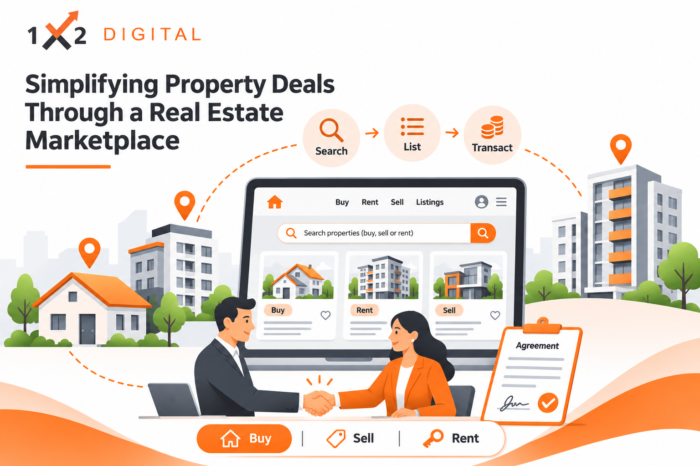
A real estate marketplace is an online platform where property owners, real estate agents, and builders can advertise properties for sale or rent. Buyers and tenants can browse these listings, compare available options, and contact advertisers directly or through the platform.
Unlike a traditional property search that may involve multiple brokers and separate advertisements, a marketplace brings property information into one searchable location.
Depending on the platform, users may find:
- Residential properties, including apartments, houses, and villas.
- Commercial properties, such as offices, shops, and warehouses.
- Residential and commercial plots.
- Properties available for rent or lease.
- New projects and properties under construction.
The platform’s main purpose is to make property discovery easier while helping advertisers connect with relevant potential customers.
How Does an Online Property Marketplace Work?
Most online property marketplaces follow a straightforward process that supports both property discovery and communication.
1. Advertisers Publish Property Listings
Property owners, agents, or builders create listings by adding the property type, location, price, size, photographs, and other relevant information.
The quality of these details influences whether potential buyers consider the property suitable.
2. Buyers Search for Properties
Visitors search using their preferred location, budget, property type, and other requirements. Search filters help narrow down the available options.
3. Users Compare Suitable Listings
Buyers review property descriptions, photographs, prices, and features to shortlist properties that match their needs.
4. Interested Users Contact Advertisers
When a listing looks suitable, users can submit an enquiry, request additional information, or arrange a property visit.
5. Buyers and Sellers Continue the Process
The advertiser responds to enquiries and discusses availability, pricing, inspections, and the next steps.
The marketplace facilitates discovery and communication. Buyers should still independently verify property documents, ownership, legal approvals, and physical condition before making a commitment.
Why Are Property Listing Sites Useful for Buyers and Sellers?
Searching for property can be time-consuming when information is scattered across different sources. Property Listing Sites make the process more organised by bringing multiple options together.
Many real estate listing sites also offer search filters and category-based browsing, allowing users to explore properties according to their location, budget, property type, and other preferences. This makes it easier to compare available options without visiting multiple sources.
Benefits for Property Buyers
Online property platforms make property discovery more convenient by bringing listings from different owners, agents, and builders into one place. Buyers can explore available properties, understand the basic details, and identify options that match their initial requirements before arranging visits.
They can also:
- Discover properties across different locations.
- Compare asking prices and property configurations.
- Contact advertisers for additional information.
- Create a shortlist before scheduling property visits.
The usefulness of these platforms depends on how accurate, complete, and up to date the listings are.
Benefits for Property Owners and Agents
Property owners and agents can use marketplaces to:
- Promote properties to people actively searching online.
- Share property details and photographs in one place.
- Receive enquiries from interested buyers or tenants.
- Update prices and availability as needed.
- Manage several property listings more efficiently.
The value of a marketplace depends on the relevance of its audience and the quality of its listings, not simply the number of properties displayed.
What Makes a Property Listing Stand Out?
A property listing should answer the questions buyers are most likely to ask. Missing or unclear information can discourage genuine enquiries, even when the property is suitable.
Create a Specific and Descriptive Title
Avoid vague titles that do not explain what is being offered.
For example:
- Weak: Beautiful Property Available
- Better: 2 BHK Apartment for Sale Near Raiya Road, Rajkot
A specific title communicates the property type and location immediately.
Include the Details Buyers Need
A useful listing should provide:
- Property type and configuration.
- Carpet area or built-up area, clearly identified.
- Asking price and applicable additional charges, where known.
- Location and nearby landmarks.
- Floor number and furnishing status.
- Parking availability and important amenities.
- Possession status or rental availability.
Accurate details help users decide whether to enquire without repeatedly asking for basic information.
Add Genuine, High-Quality Photographs
Photographs help buyers understand the property’s appearance and condition before visiting.
Include clear images of the living room, bedrooms, kitchen, bathrooms, entrance, and relevant facilities. Use recent photographs of the actual property rather than misleading stock images.
Explain the Location Clearly
Instead of relying on promotional phrases such as “prime location,” mention relevant nearby facilities, transport connections, roads, schools, hospitals, and commercial areas.
Useful location information helps buyers assess whether the property fits their daily needs.
How to Choose the Right Property Selling Sites
Not every platform is suitable for every property. Before publishing a listing, compare the available Property Selling Sites based on your target audience and advertising requirements.
Consider these factors:
| Factor | What to Check |
| Audience | Does the platform attract buyers in your target location? |
| Listing features | Can you add complete details, images, and pricing? |
| Search visibility | Can users find properties through relevant filters? |
| Enquiry management | Can you receive and respond to enquiries easily? |
| Pricing | Are listing fees and promotional charges clearly explained? |
| Listing control | Can you edit, pause, or remove unavailable properties? |
A platform with a smaller but relevant audience may generate more useful enquiries than a larger platform with limited reach in your location.
Essential Features of a Successful Real Estate Listing Website
If you are developing a Real Estate Listing Website, its features should make property discovery simple for visitors and listing management convenient for advertisers.
Advanced Search and Practical Filters
Users should be able to filter properties by location, budget, property type, bedrooms, size, furnishing, and sale or rental status.
Filters should work together accurately so that visitors receive relevant results rather than unrelated listings.
Detailed Property Pages
Each property should have an individual page with its description, photographs, specifications, location information, and enquiry options.
A well-organised property page helps users understand the offer without searching through multiple sections.
Seller and Agent Dashboards
A dashboard should allow advertisers to create listings, edit information, upload photographs, update availability, and remove properties that are no longer available.
Simple Enquiry Management
Enquiries should reach the correct advertiser. Useful features include enquiry notifications, contact details, and records that help sellers follow up with potential buyers.
Mobile-Friendly Experience
Many users search for properties on smartphones. A responsive website should display photographs clearly, load efficiently, and make important actions easy to access on smaller screens.
Maps and Location Information
Map integration can help buyers understand the property’s surroundings and proximity to relevant facilities. Location privacy should be respected, especially for occupied residential properties.
Security and Listing Moderation
Secure accounts, protected enquiry forms, appropriate data handling, and processes for reporting suspicious listings help create a more reliable marketplace.
A thoughtful UI/UX design also makes these features easier to use.
How Real Estate Portals Build Trust
Property transactions involve substantial financial decisions. Buyers need confidence that the information they see is accurate and that they can contact a genuine advertiser.
Reliable Real Estate Portals can improve trust through practical measures such as:
- Reviewing suspicious or incomplete listings.
- Allowing users to report incorrect information.
- Displaying when a listing was last updated.
- Encouraging genuine property photographs.
- Clearly identifying advertisers and agents.
- Removing or updating sold, rented, or unavailable properties.
If a platform uses verification labels, it should explain exactly what has been checked. A verified advertiser does not automatically mean that the property’s ownership, legal status, or physical condition has been guaranteed.
How Property Posting Sites Help Advertisers Get Better Enquiries
Property Posting Sites give owners and agents another way to promote available properties. However, simply publishing a listing does not guarantee that it will attract serious buyers.
To improve listing performance:
- Research comparable properties in the same area.
- Set a realistic asking price based on relevant market information.
- Write a clear description using accurate property details.
- Upload recent photographs of the actual property.
- Respond to enquiries promptly.
- Update the listing whenever availability or pricing changes.
If a listing receives views but few enquiries, conversion rate optimization can help identify friction in the page experience, photographs, description, or contact options. These factors may be affecting buyer interest.
Avoid repeatedly publishing duplicate listings or using misleading prices to attract attention. Such practices can damage trust and create a poor experience for potential buyers.
How Buyers Can Find the Right Property Online
A marketplace can make property discovery easier, but buyers still need a clear approach to avoid wasting time.
Define Your Budget and Requirements
Determine your preferred price range, property type, size, and essential features before starting your search.
Remember to account for additional costs such as registration charges, taxes, maintenance, and other applicable expenses.
Shortlist Suitable Locations
Consider your commute, family requirements, transport access, and nearby facilities when selecting neighbourhoods.
Compare Similar Properties
Compare properties with similar locations, sizes, configurations, and conditions. This provides a more meaningful basis for evaluating asking prices.
Review Listings Carefully
Check photographs, property specifications, availability, and any information that appears inconsistent or incomplete.
Visit and Verify Before Buying
Arrange a physical inspection to assess the property’s actual condition and surroundings. Verify ownership documents, approvals, and other relevant legal details with qualified professionals before making a financial commitment.
Online listings are useful for shortlisting properties, but they should not replace independent verification.
How SEO Helps a Real Estate Marketplace Attract Relevant Visitors
Search engine optimisation can help a marketplace reach people who are actively looking for properties or property-related information.
For example, users may search for apartments for sale in Rajkot, commercial property in Ahmedabad, or rental homes in a particular neighbourhood.
A useful SEO strategy should focus on making relevant pages discoverable and helpful.
Optimise Property and Location Pages
Create clear page titles, useful descriptions, descriptive URLs, and accurate property information.
Location pages should provide genuine value rather than repeating nearly identical content for multiple neighbourhoods.
Publish Helpful Property Guides
Content marketing through articles about buying a first home, understanding rental agreements, preparing a property for sale, or comparing locations can answer common questions and attract relevant organic traffic.
Strengthen Internal Linking
Connect related property guides, location pages, and property categories using descriptive links. This helps visitors discover relevant information and helps search engines understand the site’s structure.
Manage Duplicate and Expired Listings
Property websites frequently add and remove listings. This can create duplicate URLs, expired pages, and unnecessary indexable content.
Use appropriate canonical tags, redirects, noindex rules, or removal processes according to the page’s purpose. Avoid redirecting every expired listing to the homepage.
Improve Technical SEO
Review mobile usability, page speed, technical SEO, indexation settings, XML sitemaps, and relevant structured data.
Businesses looking to improve their website visibility can explore professional SEO services to identify technical and content improvements that support organic growth.
Digital Marketing Strategies for Growing a Property Marketplace
SEO is one part of marketplace growth. Combining it with other marketing channels can help attract buyers, sellers, agents, and builders.
Social Media Marketing
Use social media marketing for real estate to share property highlights, new project updates, location guides, and useful buying tips. Visual content can help introduce properties to relevant audiences.
Paid Advertising
Run targeted campaigns for specific locations, property categories, or projects. Ensure that the landing page matches the advertisement and provides accurate information.
Content Marketing
Publish useful articles that answer common property questions. Helpful content can support buyer research and introduce users to relevant listings.
Email Marketing
Send property updates and relevant information to users who have subscribed. Keep messages useful and provide a clear unsubscribe option.
Local Digital Marketing
A property marketplace targeting Gujarat may need regional campaigns to reach property buyers, owners, agents, and builders in specific cities. Businesses planning these campaigns can evaluate a digital marketing agency in Rajkot or compare options when searching for the best digital marketing agency in Ahmedabad. The choice should depend on the agency’s understanding of the real estate audience, campaign strategy, and ability to measure relevant enquiries.
How to Measure Marketplace Performance
A growing marketplace should measure more than website traffic. It should understand whether visitors find suitable properties and whether advertisers receive meaningful enquiries.
| Metric | What It Measures |
| Organic traffic | Visitors arriving through search engines |
| Listing views | Interest in individual properties |
| Search-to-view rate | How often search results lead to property page visits |
| Enquiry conversion rate | How often visitors submit enquiries |
| Active listings | Properties currently available |
| Listing completion rate | Whether advertisers provide required details |
| Response time | How quickly advertisers respond |
| Returning visitors | Whether users return to explore more properties |
For example, high traffic with few enquiries may indicate that listings lack useful information, prices are unrealistic, or contact options are difficult to find.
Similarly, if advertisers start creating listings but do not complete them, the submission process may need to be simplified.
Regularly reviewing these metrics helps marketplace owners make improvements based on actual user behaviour.
Final Thoughts
A successful real estate marketplace makes property discovery easier for buyers while helping owners, agents, and builders reach relevant audiences.
Accurate listings, useful filters, genuine photographs, reliable communication, and a smooth browsing experience create value for both sides.
Whether you are building a property platform, managing an existing portal, or advertising an individual property, focus on helping users find the information they need and take the next step with confidence.
When a marketplace prioritises relevance, transparency, and convenience, it creates a stronger foundation for long-term growth.
Frequently Asked Questions
1. What is the best real estate marketplace for selling property?
The best marketplace depends on your location, property type, target audience, and advertising budget. Compare platforms based on local reach, listing features, enquiry management, and pricing before choosing one.
2. How do I list my property online?
Choose a suitable property platform, create an account if required, and add the property’s location, price, size, photographs, and description. Review the information for accuracy before publishing.
3. What should a good property listing include?
A good listing should include the property type, location, price, size, photographs, amenities, availability, and contact information. Clear and accurate details help buyers decide whether to enquire.
4. What is the difference between a property portal and a real estate marketplace?
A property portal primarily helps users search and browse property information. A real estate marketplace also facilitates connections and interactions between buyers, sellers, agents, and other participants. In practice, many platforms provide both functions.
5. Are online property listings reliable?
Online listings can be useful, but their accuracy varies. Buyers should confirm availability, inspect the property, verify ownership and legal documents, and independently check important claims before making a purchase.
More from our blog
See all posts