Real Estate Marketplace: Where the Right Property Finds the Right Buyer
- October 12, 2026
Introduction
Finding the right property is not always easy. Buyers may search through different websites, compare prices, check locations, and review multiple options before deciding where to enquire. At the same time, property owners and real estate businesses need a reliable place to present their listings to the right audience.
This is where a Real Estate Marketplace can make the property search process more organised. By bringing listings, property information, locations, and potential buyers together, a marketplace can make it easier for people to discover relevant properties and take the next step.
What Is a Real Estate Marketplace?
A Real Estate Marketplace is an online platform where properties can be listed, searched, compared, and explored by potential buyers or tenants.
Depending on the platform, users may find:
- Residential properties
- Apartments and flats
- Independent houses
- Villas
- Plots
- Commercial properties
- Rental properties
- New real estate projects
For buyers, the marketplace creates a central place to explore available options.
For sellers, builders, and agents, it provides a way to present properties to people who are actively searching.
The main value is simple: bringing property supply and buyer demand closer together.
Why Property Buyers Use Online Marketplaces
Property buyers usually have several requirements before they contact a seller.
They may want to know:
- Where is the property located?
- What type of property is it?
- What is the price?
- How large is the property?
- How many bedrooms does it have?
- What amenities are available?
- Is it suitable for their needs?
- How can they contact the seller?
- Can they schedule a visit?
Searching for all this information manually can take time.
A marketplace can make the process easier by allowing users to search and filter properties based on the details that matter to them.
For example, someone looking for a 2 BHK apartment in a particular area can narrow the results instead of going through unrelated properties.
How Property Listing Sites Help Sellers
For a property seller, getting the right people to see a listing is often one of the biggest challenges.
A property may be good, but potential buyers cannot consider it if they never discover it.
Property Listing Sites give sellers another place to showcase their properties online.
A useful listing can include:
- Property title
- Location
- Property type
- Price
- Size
- Bedrooms or configuration
- Amenities
- Property description
- Images
- Videos
- Contact information
The quality of this information matters.
A listing with a clear title, accurate details, useful images, and a simple enquiry option gives buyers more information before they decide whether to contact the seller.
What Makes a Property Listing Useful?
Not every listing provides the same experience.
A property listing should answer the basic questions a potential buyer is likely to have.
Use a clear title
The title should quickly explain what the property is.
For example, instead of using a vague title such as:
“Beautiful Property Available”
a clearer title could explain the property type and location.
Provide accurate information
Property size, location, configuration, amenities, and other important details should be presented clearly.
Incomplete information can create unnecessary questions and may make buyers leave the listing.
Use relevant images
Good property photographs help buyers understand the property before arranging a visit.
Images should represent the actual property as accurately as possible.
Add a clear description
The description should explain the property’s important features without filling the page with unnecessary promotional language.
Make contact easy
If a buyer is interested, they should be able to easily enquire, call, or contact the seller.
Property Selling Sites Can Make Property Discovery Easier
Buyers may use different platforms depending on whether they are looking for a home, investment property, rental, or commercial space.
Property Selling Sites can help sellers reach people who are already interested in buying or exploring property.
For example, a seller listing a residential property can provide information about its location, configuration, amenities, and other relevant features.
However, sellers should not assume that simply uploading a listing guarantees a sale.
The listing still needs to be accurate, attractive, easy to understand, and relevant to the audience.
A marketplace can create the opportunity for discovery, but the quality of the listing and the seller’s response can influence what happens next.
How Real Estate Listing Sites Help Buyers Compare Properties
A buyer rarely considers only one property.
They may compare:
- Price
- Location
- Property size
- Configuration
- Amenities
- Condition
- Nearby facilities
- Connectivity
- Other property features
This is why Real Estate Listing Sites can be useful.
When multiple properties are available in one place, buyers can explore different options and decide which ones deserve closer attention.
The marketplace becomes more valuable when search and filtering tools make this comparison easier.
The Importance of Search and Filters
Imagine a buyer is looking for a 3 BHK apartment in a specific area.
If the marketplace displays hundreds of unrelated listings, the buyer may find the experience frustrating.
Useful filters can help users narrow their search.
Depending on the marketplace, filters may include:
- Location
- Property type
- Price range
- Property size
- Bedrooms
- Furnishing
- Amenities
- Sale or rent
- New or resale property
The exact filters should depend on the types of properties available on the platform.
The goal is simple: help buyers reach relevant properties faster.
Real Estate Listing Website: What Should It Offer?
A Real Estate Listing Website should be designed around the needs of both property seekers and property providers, which makes thoughtful UI/UX design important for search, navigation, and enquiries.
For buyers, important features may include:
- Easy property search
- Useful filters
- Property details
- Image galleries
- Location information
- Enquiry options
- Contact details
For sellers, agents, or builders, useful features may include:
- Simple property submission
- Listing management
- Image uploads
- Property details management
- Enquiry access
- Listing updates
A marketplace becomes more useful when both sides can use it without unnecessary complexity.
Why Property Information Matters More Than Just Promotion
Real estate listings sometimes focus too heavily on promotional language.
Phrases such as “best property,” “perfect location,” or “great investment” may sound attractive, but buyers still need specific information before making a decision.
Instead of relying only on promotional claims, a listing can explain:
- Exact location
- Property configuration
- Available facilities
- Property size
- Relevant features
- Nearby locations
- Availability
- Contact or visit options
Clear information helps buyers understand whether the property is actually relevant to them.
Real Estate Portals and the Search Experience
Real Estate Portals can bring a large number of property listings together in one platform.
This can be useful for buyers because they do not have to depend on a single seller or property source.
A portal may include listings from different sellers, agents, builders, or property owners.
But more listings do not automatically mean a better marketplace.
If users find duplicate, incomplete, outdated, or poorly presented listings, the search experience can become difficult.
This makes listing quality and platform organisation important parts of a successful real estate marketplace.
The Problem With Poor-Quality Property Listings
A marketplace can have many properties and still provide a poor experience if the listings are not maintained properly.
Common problems include:
Incomplete property details
A buyer may leave if important information is missing.
Poor-quality images
Dark, unclear, or irrelevant images can make it difficult to understand the property.
Outdated listings
If a property is no longer available but remains visible, users may lose trust in the platform.
Duplicate listings
Seeing the same property repeatedly can make search results less useful.
Unclear contact information
Interested buyers may not know how to reach the seller.
These problems are not just technical issues. They directly affect how buyers experience the marketplace.
How a Real Estate Marketplace Can Build Trust
Property decisions involve significant time and money, so trust matters.
A marketplace can support a better experience by focusing on:
- Accurate property information
- Clear listing details
- Updated availability
- Genuine property images
- Transparent contact information
- Easy reporting of incorrect listings
- Clear communication
The platform should make it easy for users to understand what information is available and what they should verify before making a property decision.
A marketplace should not make promises about a property that the platform cannot verify.
Property Posting Sites: What Should Sellers Know?
Property Posting Sites can help property owners and agents publish listings online.
But posting a property should not be treated as a one-time task.
After publishing, sellers should review the listing regularly.
They may need to:
- Update the price
- Change availability
- Add new images
- Improve the description
- Update amenities
- Respond to enquiries
- Remove the listing when the property is no longer available
A current and complete listing gives potential buyers a better experience.
How Buyers Can Search More Effectively
Buyers can also make better use of a real estate marketplace by knowing what they actually need.
Before starting a search, it can help to define:
- Preferred location
- Property type
- Approximate budget
- Required configuration
- Desired size
- Important amenities
- Purchase or rental requirement
Once these requirements are clear, filters and search tools become more useful.
Instead of opening every property, buyers can focus on listings that are closer to their needs.
How Sellers Can Get Better Results From Listings
Creating a property listing is only the first step. Sellers should also review how people interact with it and improve the listing when it is not generating relevant enquiries.
For example, if a listing receives views but very few enquiries, the seller can review whether the property details are clear, the images are useful, the price is easy to understand, and the description answers common buyer questions.
Sellers can also:
- Update outdated property information
- Replace unclear or old images
- Improve the property description
- Check whether the price is still accurate
- Highlight important amenities or features
- Respond to enquiries promptly
- Remove the listing when the property is no longer available
The goal is not to write the longest description or add as much information as possible. It is to give buyers the right information clearly enough to decide whether the property is worth exploring further.
How Digital Marketing Can Support a Real Estate Marketplace
A marketplace needs users on both sides.
Buyers need to discover the platform, while sellers need a reason to list their properties.
Digital marketing can support this process by helping the marketplace build visibility among relevant audiences.
For example:
- SEO can help property pages appear in relevant searches.
- Social media can introduce properties and marketplace features.
- Paid advertising can promote specific property categories.
- Content marketing can answer property-related questions.
- Local search visibility can help reach users in specific areas.
The important point is that marketing should support the marketplace itself rather than simply generate traffic.
If visitors arrive but cannot find useful listings or navigate the platform easily, more traffic alone will not solve the problem.
SEO for Property Listing Pages
Search visibility can be important for a real estate marketplace because users often search for very specific property requirements, making professional SEO services useful for improving organic visibility.
A well-structured listing page can provide search engines and users with useful information about:
- Property type
- Location
- Configuration
- Relevant features
- Availability
- Property details
Each listing should have a clear and useful page structure.
However, marketplace owners should avoid creating large numbers of thin or nearly identical pages simply to target more keywords.
The content should exist because it provides value to someone searching for that property.
What Makes a Real Estate Marketplace Successful?
A successful real estate marketplace is not just about having a large number of property listings. It should make the entire process easier for both buyers and sellers.
For buyers, the experience should follow a simple path:
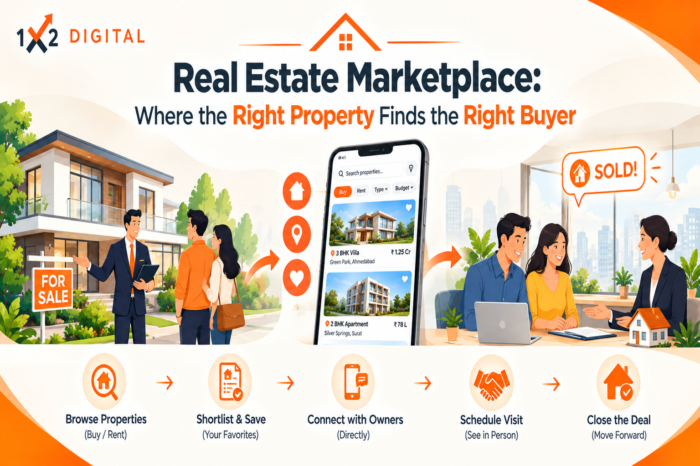
Easy Search → Relevant Results → Useful Property Information → Simple Enquiry
For sellers, the process should be just as straightforward:
Easy Listing → Better Visibility → Relevant Enquiries → Clear Communication
But creating a useful marketplace is only one part of the process. It also needs to reach the right audience and bring relevant visitors to the platform. Businesses targeting local markets can work with a digital marketing agency in Rajkot to improve online visibility and attract potential buyers or sellers.
For businesses looking to reach audiences beyond their local market, choosing the best digital marketing agency in Ahmedabad can also support broader digital strategies, depending on the target audience, location, and business goals.
The real goal is not simply to increase website traffic. A successful marketplace should connect the right property with the right audience and turn genuine interest into meaningful enquiries.
Turn Property Search Into a Better Digital Experience
A real estate marketplace sits between people looking for properties and people offering them.
Its value comes from making that connection easier.
For buyers, that means finding relevant properties without unnecessary effort.
For sellers, it means presenting their properties clearly to an audience that may genuinely be interested.
A marketplace that combines accurate listings, useful search tools, strong property pages, easy enquiries, and consistent digital visibility can create a better experience for both sides.
The objective is not simply to have more listings or more website visitors.
It is to help the right property reach the right person.
Final Thoughts
A Real Estate Marketplace can make property discovery easier by bringing buyers, sellers, agents, and listings together in one place, with effective marketplace management helping keep the platform organised and useful. But success depends on more than having a large number of properties. Accurate information, useful search filters, quality listings, and simple enquiry options create a better experience for users. With the right digital visibility, a marketplace can attract relevant visitors and help sellers connect with potential buyers. Ultimately, the goal is simple: make it easier for the right buyer to discover the right property at the right time.
FAQs
1. Which website is best for selling property?
The best website for selling property depends on the property type, location, target buyers, and listing features. A good real estate marketplace should offer strong property visibility, useful search options, clear listing details, and easy ways for interested buyers to contact the seller.
2. Why would a property be listed?
A property is listed to make it visible to potential buyers or tenants. A well-prepared listing can provide important details such as location, price, property type, photos, amenities, and contact information. Listing a property on a Real Estate Marketplace can help sellers reach a wider audience and generate relevant enquiries.
3. How do I write a good listing description for my home?
A good home listing description should clearly explain the property’s location, size, type, rooms, amenities, key features, and price. Use simple and accurate language, mention what makes the property useful or attractive, and avoid unnecessary claims. Adding clear photos and an easy contact option can also help potential buyers understand the property and make an enquiry.
4. What is a real estate portal?
A real estate portal is an online platform where people can search, view, and compare property listings. Buyers or tenants can find details such as location, price, property type, size, photos, and amenities. Sellers, agents, and builders can use these portals to list properties and connect with interested buyers or tenants.
5. How does a real estate marketplace work?
A real estate marketplace connects property sellers, agents, builders, and buyers on one online platform. Sellers can list properties with details, photos, prices, and location information. Buyers can search and filter listings based on their needs, view property details, and contact the seller for more information or a visit.
More from our blog
See all posts