From Browsing to Buying: How Fashion Ecommerce Is Changing the Way We Shop
- October 1, 2026
Introduction
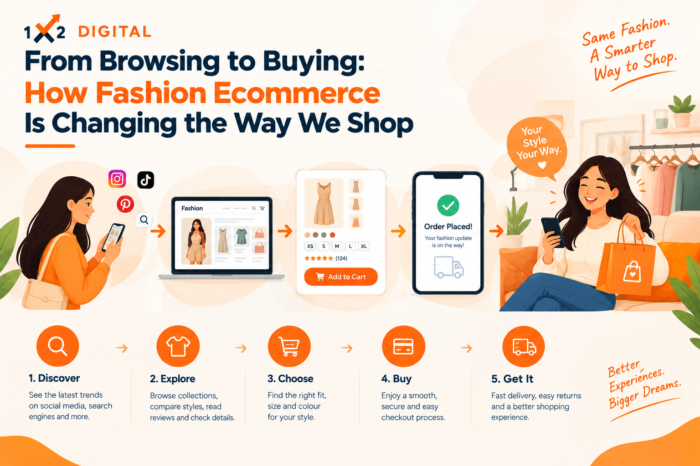
Shopping for clothes has changed a lot in recent years. Customers no longer need to visit several stores, check different products, and spend hours comparing prices. Today, they can discover a dress, compare styles, read reviews, check sizes, and place an order from their phone within minutes.
This shift has made Fashion Ecommerce an important part of the modern shopping experience. But for fashion brands, simply having an online store is not enough. Customers have many choices, and they expect a fast, convenient, trustworthy, and personalized shopping journey.
From product discovery to final purchase, every step now plays a role in whether a visitor becomes a customer.
Why Fashion Ecommerce Is Growing So Quickly
Fashion is naturally suited to online shopping because customers can browse a large number of products without visiting multiple physical stores.
A customer looking for a casual shirt, for example, can compare colors, prices, sizes, materials, reviews, and delivery options across different websites. This convenience has changed customer expectations.
However, more convenience also means more competition.
A fashion brand is not only competing with local stores anymore. It may be competing with large marketplaces, social media sellers, independent brands, and hundreds of other Fashion Shopping Websites.
This creates a major challenge: How can a fashion ecommerce brand make customers notice its products and give them enough confidence to buy?
The answer is not just offering more products. The complete online shopping experience matters.
Customers Now Discover Fashion Differently
Earlier, customers often decided what they wanted before visiting a store. Today, discovery itself has become part of shopping.
A customer may see an outfit on social media, search for a similar style on Google, visit an ecommerce website, compare alternatives, and finally purchase from a completely different brand.
This means fashion brands need to be visible at different stages of the customer journey.
Search engines, social media, product recommendations, influencer content, online reviews, and visual content can all influence what a shopper discovers.
For brands, this creates an opportunity to connect with customers before they are ready to make a purchase.
What Makes a Fashion Ecommerce Website Successful?
A successful Fashion Ecommerce Website needs to solve the problems customers commonly face while shopping online.
One of the biggest concerns is uncertainty.
Customers cannot physically touch the fabric, try on the clothes, or see how a product fits before purchasing. A good website therefore needs to provide enough information to reduce that uncertainty.
Important elements include:
- Clear and high-quality product images
- Multiple product views
- Accurate size charts
- Detailed product descriptions
- Fabric and material information
- Customer reviews
- Delivery information
- Return and exchange policies
- Easy navigation
- Mobile-friendly design
For example, simply writing “premium cotton shirt” may not be enough. Customers may want to know the fabric, fit, available sizes, washing instructions, and how the product looks from different angles.
The more important questions a product page answers, the easier it becomes for a customer to make a decision.
Mobile Shopping Has Changed the Buying Journey
Many fashion shoppers discover and purchase products using smartphones. This makes mobile experience extremely important for an ecommerce brand.
A website may look attractive on a desktop but still create problems on a small screen. Slow loading, difficult navigation, tiny buttons, complicated checkout forms, or images that take too long to load can make customers leave because of a poor mobile experience.
A mobile-friendly Clothing Ecommerce Website should make the important actions easy to find.
Customers should be able to:
- Find a product quickly.
- Understand its details.
- Select the correct size or variation.
- Add it to the cart easily.
- Complete checkout without unnecessary steps.
The goal is simple: remove friction between product discovery and purchase.
Personalization Is Making Online Fashion Shopping Smarter
Customers do not want to scroll through thousands of products that are irrelevant to them.
Modern ecommerce experiences can use customer behaviour to show more relevant products. Recommendations may be based on previous purchases, browsing behaviour, preferred categories, or products viewed earlier.
For example, someone repeatedly browsing formal shirts may receive recommendations for trousers, blazers, or similar shirts instead of completely unrelated products.
Personalization can make a large ecommerce catalog feel easier to navigate.
However, personalization should be useful rather than intrusive. Customers should still have control over what they see and how their information is used.
Social Media Is Becoming Part of Fashion Discovery
Fashion and visual content naturally work well together.
Customers often discover new styles through Instagram, YouTube, short videos, creators, and other social platforms. A product that catches attention in a short video can lead a customer directly to an online store.
This has changed the role of social media . It is no longer only a platform for brand awareness. It can also become an important part of the product discovery and buying journey.
Fashion brands can use social content to show:
- How an outfit looks when worn
- Different styling ideas
- New collections
- Product details
- Customer experiences
- Seasonal fashion trends
The strongest content does not simply say “buy this product.” It helps customers understand how the product could fit into their lifestyle.
Why Product Pages Matter More Than Ever
A customer may discover a fashion brand through an advertisement or social media post, but the product page often becomes the final decision-making point.
A weak product page can lose a customer even after successful marketing has brought that visitor to the website.
A strong product page should answer the customer’s practical questions before checkout.
For example:
What is the product?
Clearly explain the style, material, fit, and important features.
Will it fit me?
Provide an understandable size guide and, where possible, fit information.
Will it look like the image?
Use clear and realistic product photography.
Can I return it?
Make return and exchange information easy to find.
When will I receive it?
Give clear delivery information.
When these questions are answered properly, customers have fewer reasons to leave the page and search elsewhere.
Fashion Ecommerce SEO Helps Customers Find the Right Products
A beautiful ecommerce website is not useful if potential customers cannot find it.
This is where ecommerce SEO becomes important.
Search engines can help customers discover products when they are actively looking for them. A fashion brand can optimize its website around relevant product categories, styles, materials, occasions, and customer questions.
For example, instead of targeting only a broad term such as “clothes,” a brand may create useful category and product pages around more specific searches.
A well-planned SEO strategy can improve:
- Product visibility
- Category discovery
- Organic website traffic
- Search relevance
- Product page clicks
- Long-term customer acquisition
SEO should therefore be connected with the actual products and customer needs rather than simply adding keywords to every page.
Fashion Ecommerce Websites Need Better Category Structure
As a fashion catalog grows, navigation becomes increasingly important.
Imagine a website with thousands of products but only a few broad categories. Customers may have difficulty finding what they need.
A better structure can organize products by relevant shopping needs, such as:
Women → Dresses → Casual Dresses → Summer Dresses
or
Men → Shirts → Formal Shirts → Full Sleeve Shirts
The exact structure depends on the brand’s products and customer behaviour.
A clear category structure helps customers browse products while also giving search engines a better understanding of the website.
Trust Can Decide Whether a Customer Buys
One of the biggest challenges in online fashion shopping is trust.
Customers may hesitate because they cannot physically inspect the product before ordering. They may also worry about incorrect sizing, poor quality, delayed delivery, or difficult returns.
Trust can be strengthened through:
- Genuine customer reviews
- Clear return policies
- Secure payment options
- Transparent pricing
- Accurate product information
- Real product photographs
- Clear contact information
- Reliable delivery information
These elements may look simple, but they can have a major effect on the customer’s decision.
The Checkout Experience Can Make or Break a Sale
Getting a customer to the cart is not the same as getting an order.
A customer may abandon the purchase if checkout is confusing, slow, or filled with unexpected costs.
Common problems include:
- Unexpected shipping charges
- Too many checkout steps
- Limited payment options
- Forced account creation
- Complicated forms
- Unclear delivery dates
Fashion ecommerce brands should regularly review the checkout journey from a customer’s point of view.
The question should be:
“What could make a ready-to-buy customer stop here?”
Finding and removing those barriers through conversion rate optimization can improve the chances of completing a purchase without necessarily increasing advertising spend.
The Future of Fashion Ecommerce Is More Customer-Focused
Fashion ecommerce will continue to change as customers become more comfortable discovering, comparing, and purchasing products online.
Technology may make recommendations more personalized, shopping experiences more visual, and product discovery faster. At the same time, customers will continue to expect accurate information, simple navigation, transparent policies, and reliable service.
For fashion brands, the goal should not be to use every new technology simply because it is available.
The better approach is to use technology where it solves a real customer problem.
If customers cannot find products, improve discovery.
If they cannot understand products, improve product information.
If they abandon carts, simplify checkout.
If they do not trust the brand, improve transparency and reviews.
This customer-first approach can make a Fashion Ecommerce Website more useful while also creating better opportunities for sustainable online growth.
How Digital Marketing Supports Fashion Ecommerce Growth
Building an ecommerce website is only one part of growing an online fashion business. Customers also need to discover the brand, understand its products, and have a reason to return.
Digital marketing can support different parts of this journey through SEO, paid advertising, social media, content marketing, email marketing, and conversion optimization.
For example, SEO can help attract people actively searching for fashion products, while social media can introduce products to new audiences. Paid campaigns can support product launches, and remarketing can reconnect with visitors who did not purchase during their first visit.
Businesses looking for broader digital growth can work with a digital marketing agency in Rajkot or explore services from a digital marketing agency in Ahmedabad , depending on their market and business requirements.
The important point is that marketing channels should work together rather than operate separately.
Final Thoughts
The fashion shopping journey has moved far beyond simply visiting an online store and choosing a product.
Today, customers may discover a style on social media, search for alternatives, compare products, read reviews, check sizing, visit an ecommerce website, and finally complete the purchase on their phone.
That is why successful Fashion Ecommerce is not only about selling more products. It is about making every stage of the customer journey easier.
Brands that understand how customers discover, evaluate, and purchase fashion online can build better shopping experiences and create stronger opportunities for long-term growth.
The future of fashion ecommerce belongs to businesses that combine useful technology with clear information, trustworthy experiences, strong product presentation, and a genuine understanding of what customers need.
FAQs
1. What is fashion ecommerce?
Fashion ecommerce refers to buying and selling clothing, footwear, accessories, and other fashion products through online stores. It allows customers to discover products, compare options, check reviews and sizes, and complete purchases without visiting a physical store.
2. What makes a fashion ecommerce website successful?
A successful fashion ecommerce website should make shopping simple and trustworthy. Clear product images, detailed descriptions, accurate size guides, customer reviews, easy navigation, mobile-friendly design, transparent delivery and return policies, and a simple checkout process can help customers make confident buying decisions.
3. Why is mobile optimization important for fashion ecommerce?
Mobile optimization is important because many customers discover and purchase fashion products using smartphones. A fast, easy-to-navigate mobile website helps customers find products, check details, select sizes, add items to their cart, and complete purchases without unnecessary difficulty.
4. How does SEO help fashion ecommerce websites?
SEO helps fashion ecommerce websites become more visible when customers search for relevant products, categories, styles, or fashion-related information. Optimizing product pages, category pages, content, site structure, and other important elements can help attract relevant organic traffic and improve product discovery.
5. How can fashion ecommerce websites build customer trust?
Fashion ecommerce websites can build trust by providing accurate product information, realistic product images, genuine customer reviews, clear size guides, transparent pricing, secure payment options, and easy-to-understand return and exchange policies. These details reduce uncertainty and help customers feel more confident about purchasing online.
More from our blog
See all posts