From Properties to Powerful Brands: How Real Estate Branding Builds Lasting Trust
- October 5, 2026
Introduction
Buying a property is a major decision. People do not simply look at the size, location, or price of a property. They also want to know who they are buying from, whether the company is genuine, and whether they can trust it throughout the process.
This is where Real Estate Branding becomes important.
A strong real estate brand helps a business become more than just another property seller or developer. It gives the company a clear identity, builds recognition, and helps potential buyers feel more confident before making a decision.
In a competitive property market, good branding can influence how people remember your business, how they understand your services, and how they feel when they see your name online or offline.
What Is Real Estate Branding?
Real Estate Branding is the process of creating a clear and consistent identity for a real estate company, developer, broker, or realtor.
It includes much more than choosing a logo. A complete brand can include:
- Company name and visual identity
- Logo and colour choices
- Website design
- Social media presence
- Property presentation
- Marketing messages
- Communication style
- Customer experience
- Online reputation
For example, a real estate company may have excellent properties, but if its website looks outdated, its social media is inconsistent, and its communication is unclear, potential buyers may hesitate.
Branding connects all these touchpoints so customers get a consistent impression of the business.
Why Does Branding Matter in Real Estate?
Real estate is a trust-based business. A customer may spend months researching a developer, broker, or property before making a final decision.
A strong brand can make this process easier by giving people a clear understanding of who the company is and what it offers.
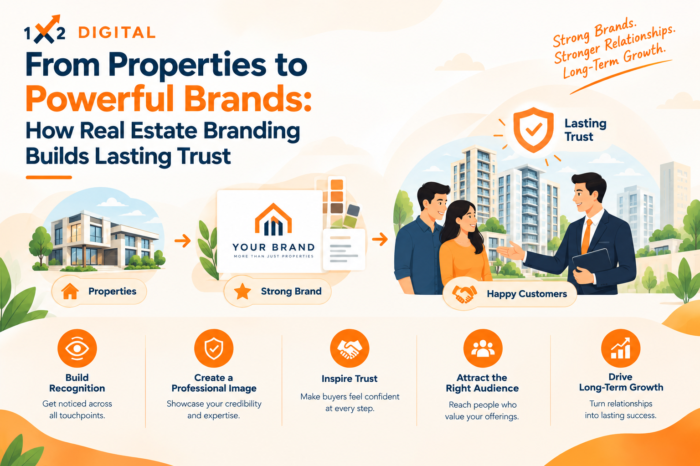
Builds Recognition
People often see many property advertisements before contacting a company. A consistent brand helps them recognise your business across websites, social media, property portals, brochures, advertisements, and other marketing channels.
Over time, this recognition can make your company easier to remember.
Creates a Professional Image
Your branding is often one of the first things a potential customer sees.
A clear website, professional Real Estate Company Logo, consistent colours, and useful property information can create a more organised brand presence.
This does not replace good service, but it can help communicate that the business takes its presentation seriously.
Helps Build Trust
Trust cannot be created through a logo alone. It develops through communication, transparency, customer experience, and consistent actions.
However, branding can support that process by presenting the company clearly and consistently.
When customers see the same professional identity across different platforms, they can better understand who they are dealing with.
How Realtor Branding Helps Individual Professionals
Branding is not only useful for large property developers. Individual realtors and brokers can also benefit from a strong personal identity.
Realtor Branding focuses on creating a recognisable identity around the individual professional.
Instead of being known only as “a property agent,” a realtor can build a clearer identity around their area, expertise, communication style, or type of property they handle.
For example, a realtor may focus on residential properties, commercial spaces, luxury homes, or properties in a particular local market.
The goal is not to make the brand complicated. It is to make it easier for potential customers to understand what the realtor does and why they should remember the business.
How Real Estate Brand Marketing Supports Growth
Once a brand identity is established, marketing becomes more consistent.
Real Estate Brand Marketing involves communicating the brand through different channels instead of promoting individual properties alone.
A property advertisement may focus on one project, price, location, or feature. Brand marketing focuses more broadly on the company behind those properties.
This can include educational property content, social media marketing for real estate, project videos, website content, customer communication, local market information, property guides, brand campaigns, and digital advertising.
The important point is consistency.
If the website communicates one message while social media presents a completely different image, the customer experience can feel disconnected.
What Makes a Strong Real Estate Company Brand?
A strong brand does not have to look complicated. It needs to be clear and consistent.
Clear Brand Positioning
First, the company should understand what it wants to be known for.
Is the business focused on affordable residential properties? Premium homes? Commercial properties? Property investment? Local brokerage services?
A clear position helps guide the website, marketing content, advertisements, and communication.
Consistent Visual Identity
The same logo, colours, fonts, imagery style, and general design language should be used across important customer touchpoints.
This is an important part of Real Estate Company Branding because consistency makes the business easier to recognise.
Useful Communication
Real estate customers usually have many questions.
They may want to know about location, property features, pricing, amenities, possession, documentation, or the buying process.
A brand that communicates clearly can make the customer journey easier.
Consistent Customer Experience
Branding does not stop after someone fills out a contact form.
The way enquiries are handled, information is shared, follow-ups are managed, and questions are answered also affects how customers see the brand.
A polished advertisement followed by poor communication creates a gap between the brand promise and the actual experience.
Why Your Real Estate Company Logo Matters
A logo is only one part of branding, but it is an important visual identifier.
A good Real Estate Company Logo should be clear, readable, and suitable for different uses.
It may appear on:
- Websites
- Property boards
- Social media
- Brochures
- Business cards
- Presentations
- Digital advertisements
- Property documents
The logo should work in different sizes and formats rather than being designed only for one location.
However, a logo should not carry the entire responsibility of building trust. A professional logo can support brand recognition, but the wider brand experience is what gives it meaning.
Real Estate Branding Services: What Can They Include?
Businesses often need support across several parts of their brand rather than only logo design. Businesses can explore professional branding services that cover different parts of their digital and brand presence.
Real Estate Branding Services may include areas such as:
- Brand strategy and positioning
- Logo and visual identity
- Brand messaging
- Website and digital presence
- Marketing materials
- Ongoing brand communication
The exact requirement depends on the company’s current position.
A new real estate company may need to build its identity from the beginning, while an established company may need to improve an outdated or inconsistent brand.
That means branding should start with the actual business problem rather than adding services simply because they are available.
When Should You Work With a Real Estate Branding Agency?
A company may consider working with a Real Estate Branding Agency when it needs a more structured approach to its brand.
This can be useful when:
- A new real estate company is entering the market
- The existing brand looks outdated
- Different marketing channels have inconsistent designs
- The company is launching a new project
- The business is expanding into a new market
- Customers are not clearly understanding the company’s positioning
- The company wants to build a stronger digital presence
Before choosing an agency, it is useful to understand exactly what is included.
Ask whether the agency is providing only visual branding or also helping with strategy, website presence, content, and digital marketing.
The right scope depends on the company’s goals.
How Digital Marketing and Branding Work Together
Branding and digital marketing are closely connected, but they are not the same thing.
Branding defines how people understand and recognise the business. Digital marketing helps the business reach people through online channels.
For example, search engine optimisation can help people discover a real estate company when they search for relevant services. Social media can help the company communicate regularly with its audience. Paid advertising can help promote specific projects or campaigns.
A business may work with the best digital marketing agency in Ahmedabad if its target market is focused on Ahmedabad or nearby areas. Similarly, businesses targeting customers in Saurashtra or surrounding markets may look for a digital marketing agency in Rajkot that understands their local audience. The important factor is not simply the agency’s location. The business should also consider whether the agency understands its industry, audience, goals, and digital requirements.
Common Real Estate Branding Mistakes to Avoid
Good branding is not only about what you should do. It is also about avoiding decisions that create confusion.
Changing the Brand Too Often
Frequent changes to the logo, colours, message, or design can make it difficult for people to recognise the company.
Focusing Only on the Logo
A logo is important, but it is not the complete brand.
Website experience, communication, content, customer service, and marketing all contribute to how people perceive a real estate business.
Making Claims That Cannot Be Supported
Real estate customers need clear information. Avoid exaggerated claims about properties, returns, locations, or services if they cannot be supported.
Clear communication can create more confidence than aggressive marketing language.
Ignoring the Digital Experience
Many potential buyers research a company online before contacting it.
If the website is difficult to use or important information is hard to find, the customer may leave before making an enquiry.
How to Build a Real Estate Brand Step by Step
A practical branding process can start with a few simple questions.
1. Understand your audience
Identify who you want to reach and what they are looking for.
2. Define your positioning
Decide what your company wants to be known for and how it is different from other businesses in the market.
3. Create the visual identity
Develop the logo, colours, typography, imagery style, and other visual elements.
4. Apply the brand consistently
Use the same identity across your website, social media, advertisements, property materials, and other important channels.
5. Build useful content
Answer the questions your customers actually ask about properties, locations, buying processes, and your services.
6. Review the customer experience
Look beyond advertising. Check what happens after someone contacts your business.
7. Keep improving
A brand should grow with the business. Customer feedback, changing markets, and new business goals may require updates over time.
How Real Estate Branding Builds Long-Term Trust
Trust is built through repeated experiences.
A person may first discover a real estate company through a Google search. Later, they may see its social media page, visit the website, watch a property video, speak with a sales representative, and eventually visit a property.
Every interaction contributes to their overall impression.
This is why Real Estate Branding should not be treated as a one-time design project. It should be part of the wider way a company communicates with its market.
A clear identity can help people recognise the business. Useful information can help them understand the offering. Consistent communication can make the customer journey easier to follow.
Most importantly, the brand should match the actual experience customers receive.
Final Thoughts
Real estate businesses compete on more than properties. They also compete for attention, recognition, and customer trust.
Strong Realtor Branding, consistent Real Estate Company Branding, useful Real Estate Branding Services, and thoughtful Real Estate Brand Marketing can help create a clearer identity in a crowded market.
The goal is not simply to make a real estate company look professional. The goal is to create a brand that people can recognise, understand, and connect with throughout their buying journey.
When branding, digital marketing, communication, and customer experience work together, a property business can build an identity that extends beyond individual projects and supports long-term growth.
FAQs
1. What is branding in real estate?
Branding in real estate means creating a clear and memorable identity for a real estate agent or company. It includes the name, logo, colours, message, online presence, and overall image that help people recognise and trust the business.
2. How do you build a real estate brand?
Real estate branding starts with defining a clear identity for your business. Choose a professional name, logo, colours, and message that match your target audience. Keep your branding consistent across your website, social media, property listings, and other marketing channels. Most importantly, communicate what makes your real estate business different and build trust through clear, useful communication.
3. How can realtors build a strong personal brand?
Realtors can build a strong personal brand by clearly showing their expertise, local knowledge, and way of working. They should keep their name, photo, message, website, and social media consistent and share useful content that helps potential clients.
4. What does a real estate branding agency do?
A real estate branding agency helps create and develop a property business’s brand identity. This can include logo design, brand strategy, website design, visual identity, content, and digital marketing to create a consistent brand presence.
5. What is the difference between real estate branding and marketing?
Real estate branding focuses on how people recognise and understand a real estate business, including its identity, image, and message. Marketing focuses on promoting the business and reaching potential customers through channels such as search engines, social media, advertising, and content.
More from our blog
See all posts