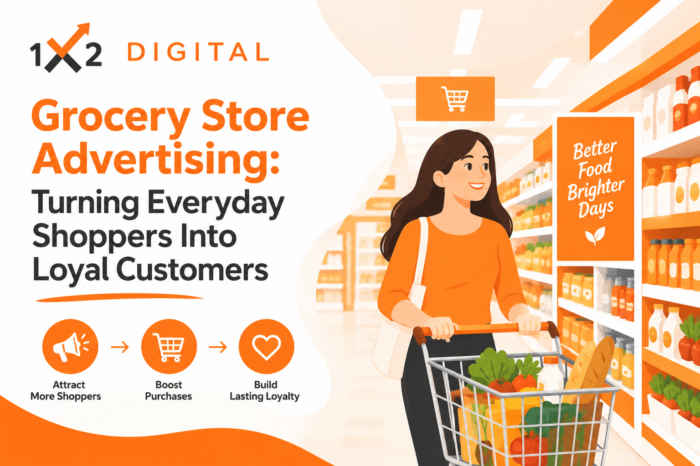
Grocery Store Advertising: Turning Everyday Shoppers Into Loyal Customers
- October 16, 2026
Introduction
Grocery shopping is part of everyday life, but customers do not always purchase from the same store. They may visit a nearby supermarket for convenience, choose another shop for better offers, or order groceries online when they have less time. For grocery store owners, attracting new customers is important, but encouraging existing customers to return is equally valuable.
This is where Grocery Store Advertising plays an important role. The right advertising strategy helps grocery stores promote daily offers, highlight product availability, reach nearby shoppers, and build stronger relationships with customers. From local promotions and social media campaigns to Google Ads and WhatsApp updates, businesses have several ways to stay connected with their target audience.
However, successful advertising is not just about announcing discounts. It is about giving customers a clear reason to visit, shop again, and recommend the store to others. In this blog, we will explore practical advertising strategies that help grocery stores attract shoppers and turn regular purchases into long-term customer relationships.
Why Grocery Store Advertising Matters for Retail Businesses
Grocery stores operate in a competitive market where customers often compare prices, product quality, convenience, and available offers before choosing where to shop. A store may offer quality products, but without effective promotion, nearby customers might not know about its services or special deals.
A well-planned Grocery Advertisement helps communicate what makes a store worth visiting. It can promote fresh produce, household essentials, seasonal products, loyalty rewards, or convenient delivery options.
Advertising also helps businesses remain visible between customer visits. For example, a supermarket that regularly shares useful offers on social media can remind customers to check its latest deals before their next shopping trip.
The goal is not simply to increase one day’s sales. It is to create a consistent shopping experience that encourages customers to return.
7 Effective Grocery Store Advertising Strategies to Attract More Customers
1. Promote Daily Offers Through Social Media
Social media provides grocery stores with an accessible way to communicate directly with local shoppers. Platforms such as Instagram and Facebook can be used to promote product offers, showcase fresh arrivals, announce seasonal discounts, and share store updates.
Instead of publishing only discount posters, stores can create content that helps customers make everyday shopping decisions.
For example, a grocery store could share a weekly essentials offer featuring rice, cooking oil, flour, and household cleaning products. A short video showing fresh fruits and vegetables arriving at the store can also help communicate product availability.
Effective social media advertising should include:
- Clear product images and readable prices.
- Offer validity dates and applicable conditions.
- Store location and contact details.
- A simple call to action, such as visiting the store or contacting the team.
Consistent, useful content helps customers remember the store when they need to purchase groceries.
2. Use Google Ads to Reach Nearby Shoppers
Many customers search online when they need a grocery store nearby or want to find a specific product. Google Ads can help businesses appear for relevant searches, depending on their targeting, budget, competition, and campaign settings.
For example, a store may target searches related to grocery stores in its service area, supermarket offers, or grocery delivery in a particular locality.
A successful campaign starts with choosing relevant keywords and defining a realistic advertising budget. The advertisement should communicate the store’s main advantage, whether that is convenient location, product variety, special offers, or delivery availability.
It is also important to send visitors to a relevant landing page or provide accurate business information. If customers click an advertisement but cannot find the store’s address, opening hours, or contact details, the opportunity may be lost.
Google Ads can support immediate visibility, while ongoing optimisation helps businesses understand which campaigns are generating useful customer enquiries or visits. Businesses that need support with campaign setup and optimisation can explore professional Google Ads campaigns management.
3. Create Attractive Grocery Sales Ads
Customers often pay attention to offers that are easy to understand and relevant to their shopping needs. Well-designed Grocery Sales Ads can help stores communicate these offers without overwhelming customers with unnecessary information.
For example, a supermarket might advertise a weekend household essentials offer or a seasonal fruit promotion. The advertisement should clearly explain which products are included, how long the offer lasts, and whether any conditions apply.
A useful advertisement generally includes:
- A clear headline highlighting the offer.
- Product images that accurately represent the items.
- Readable prices and discount details.
- The offer period and relevant terms.
- Store address, contact information, or a suitable shopping link.
Avoid advertising discounts that are unavailable in the store or using unclear pricing. Honest communication helps build customer trust and encourages shoppers to return.
4. Improve Local Visibility With Google Business Profile
For grocery stores that depend on nearby customers, local online visibility can be an important part of their marketing strategy.
A complete Google Business Profile can help customers discover a store through Google Search and Maps. Store owners should keep their address, opening hours, phone number, categories, and other relevant business information accurate.
Adding genuine photographs of the store, shelves, product sections, and entrance can help customers understand what to expect before visiting.
Businesses should also encourage genuine customer reviews and respond professionally to feedback. Reviews do not replace product quality or customer service, but thoughtful responses show that the business takes customer experiences seriously.
Local visibility works best when online information matches the actual store experience. Applying relevant local SEO strategies can also help businesses improve their visibility in location-based searches and maintain useful information for potential customers.
5. Use WhatsApp Marketing to Encourage Repeat Purchases
Grocery shopping is repetitive, which makes customer communication particularly useful. With appropriate customer permission, stores can use WhatsApp to share relevant offers, new product arrivals, and important store updates.
For example, a neighbourhood grocery store could send a weekly message featuring selected discounts on essential household products. A store offering grocery delivery might also use WhatsApp to answer product questions or coordinate orders.
To make these messages useful:
- Obtain permission before sending promotional messages.
- Share relevant offers instead of sending excessive updates.
- Keep messages short and easy to understand.
- Include accurate prices, dates, and ordering instructions.
- Respect customers who no longer want promotional messages.
The objective is to remain helpful and accessible, not to fill customers’ inboxes with repeated advertisements.
6. Build Customer Loyalty With Personalised Offers
Attracting a customer once is only the beginning. Grocery stores can encourage repeat visits by recognising customer preferences and rewarding continued shopping.
A simple loyalty programme might offer points on eligible purchases, rewards after a spending threshold, or special benefits for regular customers. Businesses can also create relevant promotions around festivals, seasonal shopping, or commonly purchased household essentials.
For example, a store could offer a loyalty reward after a customer reaches a defined purchase amount. The programme should have straightforward rules so shoppers understand how to participate and redeem rewards.
Where purchase data is collected, businesses should handle it responsibly and use it only for appropriate purposes.
Loyalty programmes work best when customers receive genuine value, reliable service, and a consistent shopping experience rather than discounts alone.
7. Combine Online Advertising With In-Store Promotions
Digital advertising can attract attention, but the in-store experience determines whether customers are satisfied with their visit.
Grocery stores can connect online campaigns with physical shopping through QR codes, offer posters, shelf displays, and promotional signage. For example, a social media campaign promoting a seasonal offer can direct shoppers to a clearly marked section inside the store.
Businesses can also use suitable offline channels, such as local flyers or community promotions, alongside digital campaigns when these channels fit the target audience.
The important point is consistency. The products, prices, offer conditions, and availability shown in an advertisement should match what customers find when they arrive.
How to Measure the Success of Grocery Store Advertising
Running advertisements without measuring their results makes it difficult to understand which activities are worth continuing. Grocery retailers should select measurements that match their campaign objectives.
Some useful indicators include:
- Reach and impressions: Understand how many people saw the advertisements and how often they appeared.
- Clicks and website visits: Measure whether online advertisements encouraged people to explore the store or its offers.
- Calls and direction requests: Review customer actions generated through relevant online business listings and campaigns.
- Offer redemptions: Track how many eligible customers used a particular promotion.
- Repeat purchases: Examine whether loyalty programmes and customer communication encourage additional visits.
- Advertising cost: Compare campaign spending with the results that can reasonably be attributed to the campaign.
For instance, if a weekend promotion receives many clicks but few customers redeem the offer, the store can review its pricing, advertisement message, targeting, and redemption process.
Not every customer visit can be directly attributed to advertising. Combining digital campaign data with sales records and customer feedback provides a more balanced view of performance. A data-driven Google Ads strategy can provide further guidance on using campaign data to refine targeting and advertising decisions.
Common Grocery Store Advertising Mistakes to Avoid
Even a well-designed campaign can underperform when its message or execution is unclear. Grocery retailers should avoid these common mistakes:
Focusing only on discounts: Constant discounts can put pressure on profit margins. Promote product quality, convenience, service, and genuine customer benefits alongside offers.
Using unclear advertisements: Missing prices, unreadable text, and unclear offer conditions can confuse customers. Keep the message simple and specific.
Ignoring local targeting: Advertising to people outside the store’s practical service area may waste budget, particularly for businesses serving a limited neighbourhood.
Posting inconsistently: Long gaps in communication can make it harder to keep customers informed. Choose a manageable publishing schedule.
Failing to track results: Without measuring relevant outcomes, businesses may continue spending on campaigns that do not support their objectives.
Avoiding these mistakes helps grocery stores use their advertising budget more thoughtfully and create a better customer experience.
How the Right Digital Marketing Agency Can Help Grocery Stores Grow
Managing advertisements, local search visibility, social media content, and campaign reporting requires time and consistent effort. Grocery businesses that lack an in-house marketing team may benefit from working with a digital marketing agency that understands their goals and target audience.
A suitable agency can help develop a marketing plan, create promotional content, manage paid advertising, improve local visibility, and evaluate campaign performance. The strategy should reflect the store’s location, customer base, competition, budget, and business objectives.
Businesses looking for a digital marketing agency in Rajkot can look for experience in local SEO, location-based campaigns, and promotions that help nearby shoppers discover their grocery store. Similarly, businesses comparing the best digital marketing agency in Ahmedabad should consider how the agency plans grocery promotions, reaches relevant customers, and measures campaign performance.
At 1into2 Digital, digital marketing services can support businesses in developing a more structured online presence and reaching relevant audiences. Grocery retailers should select services that fit their actual needs and establish clear goals before investing in campaigns.
Conclusion
Effective Grocery Store Advertising is about more than attracting attention to a discount. It combines relevant offers, local visibility, useful social media content, targeted advertising, customer communication, and loyalty-building activities to create lasting relationships with shoppers.
Grocery stores can begin with simple steps: improve their online business information, promote genuine offers, communicate consistently, and measure the results of their campaigns. As they learn which messages and channels work best, they can refine their marketing strategy and allocate their budget more effectively.
The strongest approach is to make shopping easier, provide genuine value, and give customers a reason to return. When advertising matches a reliable in-store experience, everyday grocery purchases can become the foundation for long-term customer loyalty.
FAQs
1. How to advertise a grocery store?
A grocery store can be advertised through social media, Google Ads, local listings, WhatsApp promotions, and attractive in-store offers. Sharing daily discounts, fresh product updates, and special deals can help attract new customers and encourage existing customers to shop again.
2. What is in-store advertising?
In-store advertising is the promotion of products and special offers inside a grocery store using posters, banners, shelf displays, price tags, and promotional signs. It helps attract customers’ attention, highlight discounts, and encourage them to purchase products.
3. How much should a grocery store spend on advertising?
A grocery store should set its advertising budget based on its sales goals, local competition, and available resources. Small retailers can start with a manageable budget, test different advertising channels, and track results such as offer redemptions, customer visits, and sales. The budget can then be adjusted according to campaign performance.
4. What are some effective marketing strategies for grocery stores?
Effective marketing strategies for grocery stores include social media advertising, Google Ads, local SEO, WhatsApp promotions, attractive discounts, and customer loyalty programmes. These strategies help attract new shoppers, increase sales, and encourage existing customers to return.
5. How to increase sales in a grocery store?
A grocery store can increase sales by offering attractive discounts, promoting products on social media, improving product displays, and providing loyalty rewards. Using Google Ads and local marketing can also attract new customers, while good service and quality products encourage repeat purchases.
More from our blog
See all posts