Beauty Products Website: Turn Visitors into Customers
- October 14, 2026
Introduction
A customer visits your beauty website looking for a face serum, checks a few product pages, compares prices, and leaves without placing an order. This situation is common for online beauty businesses. Getting visitors to a website is only one part of the challenge. The bigger task is helping those visitors feel confident enough to choose a product and complete their purchase.
Beauty products are personal. Customers want to understand what they are buying, whether it suits their skin or hair, what ingredients it contains, and whether the product is worth the price. If a website fails to answer these questions, even an interested visitor may decide not to buy.
A well-planned beauty products website should make product discovery simple, provide useful information, build trust, and remove unnecessary steps from the buying process. With the right combination of website design, product content, and digital marketing, beauty businesses can create a better shopping experience and improve their chances of turning visitors into paying customers.
Why Beauty Websites Struggle to Convert Visitors into Buyers
Many beauty businesses invest time and money in promotions to bring people to their online stores. However, visitors may leave without purchasing when the shopping experience does not meet their expectations.
Understanding these problems is the first step towards improving an online beauty store.
Customers Cannot Find the Right Product
Beauty stores often sell products across several categories, including cleansers, moisturisers, serums, sunscreens, makeup, and hair care. When these categories are poorly organised, customers may struggle to find what they need.
For example, someone searching for a moisturiser for dry skin should not have to browse dozens of unrelated products before finding suitable options.
Organise products into clear categories and provide useful filters based on product type, skin concern, formulation, price, or other relevant characteristics. This helps customers narrow down their choices without feeling overwhelmed.
Product Pages Do Not Answer Important Questions
A product name and an attractive photograph are rarely enough to help customers make informed beauty purchases.
Customers may want to know the ingredients, texture, usage instructions, quantity, suitability, and precautions. If these details are missing, they may leave the website to search elsewhere.
Provide clear product descriptions that explain what the product does, how to use it, and who it is intended for. Avoid unsupported promises about results, especially claims that a product will cure a skin condition or deliver guaranteed outcomes.
Customers Hesitate to Trust an Unfamiliar Store
Online shoppers cannot physically inspect a beauty product before purchasing it. They depend on the information, photographs, reviews, and policies available on the website.
Missing contact details, unclear return policies, or inconsistent product information can create doubts.
Display accurate business information, genuine customer reviews, clear delivery and return policies, and secure payment options. Trust should come from transparency rather than exaggerated marketing claims.
Beauty Products Website Design That Makes Shopping Easier
A well-designed beauty website should look appealing while helping customers complete their shopping journey with minimal confusion. Effective UI and UX design can make navigation, product selection, and important shopping actions easier to understand.
Create a Homepage That Guides Customers
The homepage should immediately communicate what the store sells and help visitors find relevant products.
Instead of filling the page with multiple promotional banners, highlight useful categories, featured products, new arrivals, and relevant offers. A skincare store, for instance, could organise its homepage around cleansers, moisturisers, sunscreens, and targeted skincare products.
Use clear navigation and prominent search functionality so customers can reach the right section quickly.
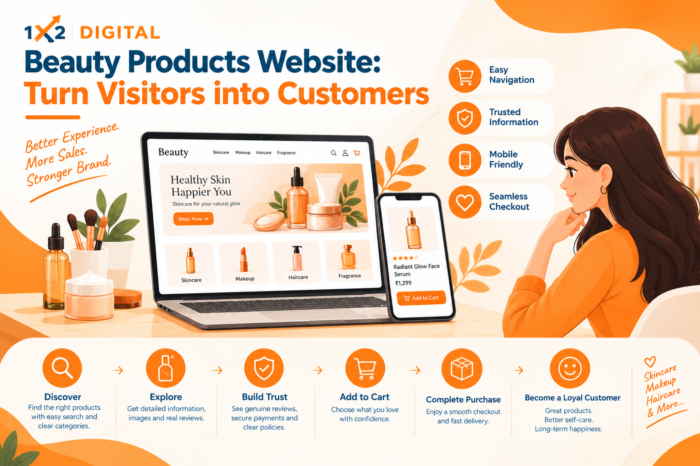
A well-organised beauty product online store helps visitors explore categories, compare products, and find the items they need without confusion.
Use Product Images That Support Buying Decisions
Beauty products are highly visual, but photographs should do more than make a page attractive.
Show the packaging clearly, include close-up product images, and display the product size or quantity. Where appropriate, add images showing the texture or application of the product.
For makeup, shade information and realistic colour representations can help customers compare options. For skincare, ingredient information and usage instructions may be more valuable than decorative imagery alone.
Make sure the images accurately represent the product and do not mislead customers about its appearance or results.
Make Mobile Shopping Convenient
Many customers browse beauty products on their phones, often while comparing products across different stores. A website that is difficult to navigate on a small screen can discourage them from completing an order.
Use readable text, mobile-friendly product galleries, accessible buttons, and short checkout forms. Test the entire purchase journey on mobile devices, from searching for a product to receiving an order confirmation.
Also optimise image sizes, remove unnecessary scripts where possible, and monitor page performance. Faster, more usable pages reduce friction, although speed alone cannot guarantee sales.
Product Pages That Help Customers Make Confident Choices
The product page is where curiosity becomes a purchasing decision. If the page leaves important questions unanswered, customers may postpone the purchase or choose another store.
A useful product page should include the following elements:
- Clear product name: Explain exactly what the item is and which variant the customer is viewing.
- Accurate description: Describe the product’s purpose, key features, and relevant benefits without making unsupported claims.
- Ingredient information: Display the ingredient list and explain relevant ingredients in straightforward language.
- Usage instructions: Tell customers how to apply or use the product and include appropriate precautions.
- Price and quantity: Make the price, product size, and available variants easy to identify.
- Delivery information: Explain applicable shipping charges, estimated delivery timelines, and return conditions.
- Customer reviews: Display genuine feedback that helps shoppers understand other customers’ experiences.
For example, a vitamin C serum page should explain its intended use, concentration where accurately established, directions, and relevant precautions. It should not promise that every customer will achieve the same result.
A detailed product page helps customers understand each online beauty product before making a purchase. This information supports informed decisions and reduces uncertainty during shopping.
Beauty Online Shopping: How to Reduce Abandoned Carts
Customers may add products to their carts and still leave before paying. This can happen because of unexpected shipping charges, limited payment options, complicated forms, or uncertainty about delivery and returns.
A smoother beauty online shopping experience addresses these concerns before they become reasons to leave.
Keep the Checkout Process Simple
Ask for only the information necessary to process an order. Allow guest checkout where practical, make the total cost visible before payment, and provide clear instructions at each step.
Avoid forcing customers to create an account before they can understand the final price or delivery details.
Explain Delivery and Returns Clearly
Customers should know what happens after they place an order. Display shipping costs, delivery estimates, cancellation conditions, and return or exchange policies in accessible locations.
Beauty products may have specific hygiene-related return restrictions. Explain the applicable policy clearly before purchase rather than leaving customers to discover it afterwards.
Customers who buy beauty products online should be able to check delivery charges, payment options, and return policies before completing their orders.
Offer Suitable Payment Options
Provide reliable payment methods that suit your target audience and market. Depending on the business, these may include UPI, cards, net banking, or cash on delivery where supported.
Make payment instructions clear and provide an appropriate confirmation after successful checkout. If a payment fails, guide the customer on how to retry without making them restart the entire shopping process unnecessarily.
Digital Marketing for Online Beauty Stores
A well-designed store still needs relevant visitors. Marketing should attract people who are genuinely interested in the products the business sells rather than focusing only on increasing website traffic.
The right strategy depends on the audience, product range, budget, and buying cycle.
Use SEO to Reach Customers Searching for Products
Professional search engine optimization services can help beauty businesses improve their search visibility and reach people looking for relevant products and information.
For example, a store selling moisturisers could create helpful category pages and product descriptions based on the products it actually offers. Informational content can answer questions about choosing a moisturiser, understanding ingredients, or building a suitable skincare routine.
Use relevant keywords naturally in page titles, headings, product descriptions, and meta descriptions. Avoid creating several nearly identical pages just to target small keyword variations.
Technical SEO also matters. Maintain a logical site structure, use descriptive image alt text, manage duplicate product URLs, and check important pages for indexing through Google Search Console. A well-planned eCommerce SEO strategy can help improve product discoverability and the overall search experience.
Use Social Media to Demonstrate Products
Beauty shoppers often want to see how a product looks, feels, or fits into a routine before purchasing it.
Short demonstrations, product application videos, ingredient explainers, and genuine customer experiences can help answer these questions. Link relevant posts to the correct product pages so interested viewers can find the items without searching through the entire store.
Keep promotional claims accurate and make sure demonstrations represent the actual product.
Use Paid Advertising with a Clear Goal
Paid search and social media campaigns can introduce products to potential customers, but advertising should be connected to a useful landing page.
If an advertisement promotes a particular sunscreen, send visitors to that sunscreen’s product page or a relevant category rather than an unrelated homepage.
Measure more than clicks. Track add-to-cart actions, completed purchases, conversion rate, average order value, and advertising cost relative to revenue. These measurements help identify whether a campaign is attracting buyers or simply generating visits.
Beauty Products E-Commerce: Measure What Prevents Sales
An online store can receive traffic and still struggle to generate enough orders. Instead of redesigning everything based on assumptions, review how customers actually use the website.
A practical beauty products e-commerce improvement process begins by identifying where shoppers leave the buying journey.
For example:
- If visitors leave category pages quickly, review navigation, product relevance, and filtering options.
- If product pages receive visits but few add-to-cart actions, check product information, pricing, images, and customer concerns.
- If many customers abandon their carts, investigate delivery charges, checkout complexity, and payment failures.
- If customers purchase once but rarely return, review product satisfaction, customer support, and relevant post-purchase communication.
Use website analytics and e-commerce reports to compare performance over time. Applying conversion rate optimization techniques can help businesses identify friction points and test improvements to the shopping journey.
Test one meaningful change at a time where possible, so the business can better understand what improves the customer experience.
Avoid assuming that every abandoned cart has the same cause. The best solution depends on the behaviour and needs of the store’s actual customers.
When to Seek Professional Digital Marketing Support
Managing a beauty store involves more than uploading products. Business owners may also need to coordinate SEO, advertising, product content, analytics, and conversion improvements.
A professional marketing partner can help identify gaps, prioritise improvements, and develop a strategy based on business goals.
Businesses looking for a digital marketing agency in Rajkot can evaluate providers based on their SEO process, reporting standards, and understanding of e-commerce. Similarly, businesses comparing options for the best digital marketing agency in Ahmedabad should look for a team that explains its approach clearly instead of promising guaranteed rankings or sales.
At 1into2 Digital, businesses can explore digital marketing support such as SEO, content marketing, and paid advertising, depending on their requirements.
Before choosing an agency, ask how it will measure progress, which improvements it recommends first, and how it will report on relevant outcomes. Clear objectives and transparent reporting make it easier to assess whether the strategy is helping the business.
Conclusion: Turn Your Beauty Website into a Better Shopping Experience
A successful beauty store needs more than attractive product photographs and promotional offers. Customers need clear product information, easy navigation, trustworthy policies, and a convenient way to complete their purchases.
A well-planned beauty products website brings these elements together. By improving product pages, simplifying checkout, attracting relevant visitors, and monitoring customer behaviour, beauty businesses can identify barriers that prevent sales and make informed improvements.
Start with the biggest problem your customers face. If they cannot find products, improve navigation. If they hesitate before buying, provide clearer information. If they abandon checkout, investigate the obstacles.
The goal is to create a shopping experience that helps customers choose confidently and gives the business a stronger foundation for sustainable online growth.
FAQs
1. How to Create an Online Beauty Supply Store?
To create an online beauty supply store, choose an e-commerce platform, register a domain name, and design a user-friendly website. Add your beauty products with clear photos, prices, and descriptions. Set up secure payment options, delivery services, and clear return policies. Finally, use SEO and social media marketing to attract customers and increase sales.
2. How to Create a Beauty Website?
To create a beauty website, choose a domain name and a suitable website platform. Design a simple layout, add your beauty products with clear photos and descriptions, and include prices and contact details. Set up secure payment options and make the website mobile-friendly. Use SEO to help customers find your website online.
3. What Features Should a Beauty Products Website Have?
A beauty products website should include clear product categories, detailed product descriptions, accurate images, ingredient information, customer reviews, secure payment options, and transparent delivery and return policies. A mobile-friendly design and simple checkout process can also help customers complete their purchases.
4. Which Is the Best Online Site for Beauty Products?
The best online site for beauty products depends on your needs, budget, and preferred brands. Websites like Nykaa, Purplle, and Amazon offer a wide range of skincare, makeup, and haircare products. Compare prices, check product reviews, and buy from trusted sellers to ensure product quality.
5. How Can I Improve Conversions on My Beauty Products Website?
You can improve conversions by making product information easy to understand, simplifying navigation and checkout, displaying clear delivery and return policies, and offering reliable payment options. Review website analytics to identify where customers leave the buying journey and make improvements based on their behaviour.
More from our blog
See all posts