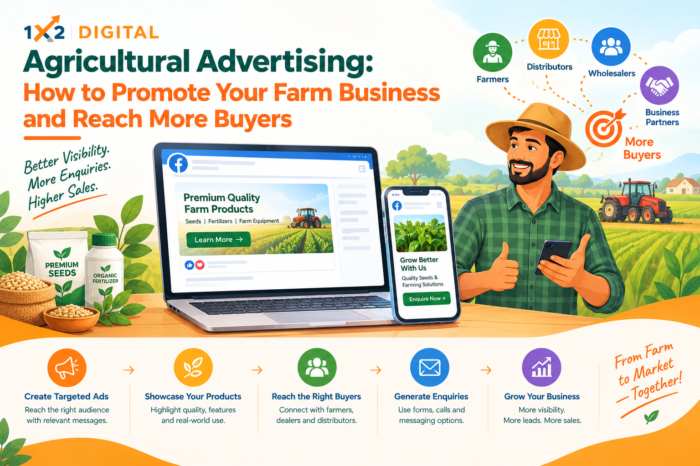
Agricultural Advertising: How to Promote Your Farm Business and Reach More Buyers
- October 30, 2026
Introduction
Selling agricultural products is not only about offering good quality. You also need to make sure the right buyers know what you sell, understand how your products meet their needs, and know how to place an order.
For example, a seed supplier may need to connect with local dealers before the sowing season, while a farming equipment manufacturer may want to build relationships with distributors and commercial farms. A business selling fresh produce may have a completely different goal: finding wholesalers, retailers, restaurants, or direct customers.
These businesses need different ways to promote their products. A general advertisement may introduce your company, but a focused strategy can help you reach buyers who are more likely to need your products.
This is where agricultural advertising can support your business. By combining product-specific communication, suitable advertising channels, seasonal planning, and buyer relationships, agricultural businesses can improve their visibility and create more opportunities to sell.
Why Agricultural Businesses Need a Different Advertising Approach
Agricultural products are often purchased according to practical needs rather than impulse. Buyers may consider product suitability, availability, price, quality documentation, delivery arrangements, and the reliability of the supplier before placing an order.
The purchasing process can also differ between customer groups. An individual farmer may need a particular product for an upcoming crop cycle, while a distributor may evaluate supply capacity, wholesale pricing, and the potential for repeat orders.
Your advertising should reflect these differences.
For instance, an irrigation equipment supplier could focus on product specifications and installation support. A wholesale seed supplier could communicate available varieties, packaging options, and dealer enquiry details. A farm producing fresh vegetables might highlight its available produce, supply quantities, and delivery area.
A more focused approach helps you:
- Explain what makes your products relevant to a particular buyer.
- Reach farmers, dealers, wholesalers, and agricultural businesses with different requirements.
- Provide the information buyers need before requesting a quotation.
- Promote products when customers are preparing to purchase.
- Build recognition among buyers who may need your products again.
The objective is not simply to get more people to see your advertisements. It is to make your products easier for the right buyers to discover, evaluate, and purchase.
6 Practical Ways to Promote Your Agricultural Business
1. Build Your Advertising Around the Agricultural Buying Cycle
Agricultural demand often changes according to crop requirements, regional farming practices, weather conditions, and the time of year. The right time to promote a product can therefore be just as important as the advertisement itself.
Start by mapping your products against the purchasing periods relevant to your target market.
For example, a supplier of seeds may need to reach dealers before the relevant sowing period. A business selling harvesting equipment may need to introduce its products before customers prepare for harvest. An agricultural packaging supplier may focus on businesses that need packaging before collection, storage, or distribution.
Create a product calendar that identifies:
- When customers typically begin looking for each product.
- How early dealers or farmers need to arrange supplies.
- Which products require advance orders.
- When stock availability and delivery details should be communicated.
- Which customer groups need reminders or product updates.
Use conversations with existing customers and distributors to validate these timings. Agricultural demand varies by region and product, so avoid applying the same schedule to every market.
Planning promotions around real purchasing requirements can help your sales team prepare stock, communicate availability, and respond to enquiries more effectively.
2. Use Digital Advertising to Reach Buyers Looking for Specific Products
Some agricultural buyers already know which product or supplier they need. Others are comparing different options before making a decision. Digital advertising can help your business reach people at these different stages.
Google Ads can be useful when customers search for products such as irrigation systems, farming machinery, agricultural seeds, or wholesale farm supplies.
Well-planned agricultural ads should match the buyer’s needs, the product being promoted, and the action you want the buyer to take.
For better relevance, organise campaigns around the products and customers you actually serve.
For example, a company supplying commercial irrigation equipment could create a campaign focused on its irrigation product range rather than using one broad advertisement for every agricultural item it sells.
Make your advertisements useful by including:
- The specific product or product category.
- Important specifications or intended applications.
- Relevant service or distribution areas.
- Availability or quotation information, where appropriate.
- A clear next step, such as requesting a product catalogue or contacting the sales team.
Send interested visitors to a page that contains information about the advertised product. If you sell in bulk, explain how buyers can enquire about wholesale quantities or distributor arrangements.
Monitor which searches generate relevant business enquiries. If an advertisement attracts visitors who are looking for products you do not sell, refine your keywords and targeting.
The aim is to connect advertising expenditure with genuine buyer interest rather than focusing on website traffic alone.
3. Show Your Products in Real Agricultural Situations
Agricultural products can have practical features that are difficult to explain through a short written advertisement. Real product demonstrations can help buyers understand how an item works and whether it fits their requirements.
For a machinery supplier, this might mean showing how a machine operates, explaining its intended applications, or demonstrating relevant maintenance procedures.
For an irrigation business, a demonstration could explain system components, installation requirements, and the type of setup the product is designed to support.
A supplier of agricultural inputs can provide accurate product information, approved usage instructions, packaging details, and relevant technical documentation.
When preparing promotional material:
- Use genuine photographs and videos of the actual product.
- Explain practical features instead of relying on broad promotional claims.
- Show important specifications clearly.
- Obtain permission before publishing customer images or testimonials.
- Avoid guaranteeing crop yields, profits, or performance without reliable supporting evidence.
These demonstrations can be shared on your website, social media pages, product listings, and relevant advertising campaigns.
The advantage is that buyers receive information they can use to evaluate your offering before contacting your sales team.
4. Develop Your Dealer and Distributor Network
Many agricultural businesses depend on dealers, retailers, wholesalers, and regional distributors rather than selling directly to every end customer.
If your business follows this model, your advertising should help potential trade partners understand why they should consider working with you.
For example, an agricultural equipment manufacturer may want to reach dealers in regions where it does not yet have strong distribution coverage. A wholesale seed supplier may want to introduce its product range to retailers serving farming communities.
Your promotional material can communicate:
- The products available for distribution.
- Relevant packaging sizes and product specifications.
- The areas your business can supply.
- How dealers can request wholesale pricing.
- The process for discussing supply arrangements.
- Available product information and sales support.
You can use a website enquiry page, targeted business advertising, relevant industry directories, or direct outreach to potential trade partners.
Avoid promising exclusive territories, guaranteed margins, or special commercial terms unless those arrangements genuinely exist.
When an interested dealer contacts you, record the location, product category, expected quantity, and next step. This makes it easier to prioritise suitable opportunities and maintain organised communication.
5. Make Your Agricultural Product Information Easy to Find
A potential buyer may discover your business through an advertisement but still need additional information before placing an order. If product details are missing or difficult to understand, the buyer may contact another supplier.
Your agriculture website or digital product catalogue should answer the questions customers are most likely to ask.
Depending on your business, include:
- Product names, categories, and specifications.
- Available models, varieties, or packaging options.
- Intended uses and relevant technical information.
- Minimum order quantities, if applicable.
- Delivery coverage and enquiry details.
- Product documentation or certifications, where relevant.
For bulk suppliers, make it clear how a buyer can request a quotation or discuss recurring supply requirements. For businesses selling directly to farmers, provide straightforward information about availability, purchasing options, and product suitability.
Search engine optimization can also help buyers discover your products through relevant searches. Create useful pages for your actual product categories and answer the questions your customers regularly ask.
Avoid creating multiple pages that contain nearly identical descriptions. Each important page should provide a distinct reason for a buyer to visit it.
6. Use Customer Relationships to Encourage Repeat Orders
In agriculture, a customer’s relationship with a supplier may continue across multiple purchases or farming cycles. Advertising can support these relationships by keeping customers informed about relevant product updates and availability.
For example, a distributor may need information about restocking, a machinery buyer may want maintenance guidance, or a regular produce customer may need to know which products are available this week.
You can support existing customers through:
- Product availability announcements.
- Relevant restocking reminders.
- Updates about new product models or varieties.
- Seasonal product information.
- Useful maintenance or product-handling guidance.
- Follow-up communication after a quotation or purchase.
Use appropriate customer permissions and respect communication preferences. Keep messages relevant to the recipient instead of sending every customer the same promotion.
Repeat business should be measured through actual purchase history, not assumed from message opens or social media engagement.
When customer communication is timely and useful, it can make it easier for buyers to return when they need another order.
How to Choose the Right Advertising Channels for Agricultural Products
The best advertising channel depends on your product, buyer type, and sales process. A business seeking wholesale distributors may need a different approach from a farm selling fresh produce directly to consumers.
| Channel | Suitable use | What to communicate |
| Google Ads | Reach buyers actively searching for specific agricultural products | Product details and quotation options |
| Facebook and Instagram | Demonstrate products and showcase genuine agricultural work | Product features, demonstrations, and availability |
| Connect with agricultural manufacturers, distributors, and professional buyers | Product range and business supply capabilities | |
| Website and SEO | Help buyers research products and suppliers | Specifications, applications, and purchasing information |
| Agricultural trade events | Introduce products and meet potential business partners | Demonstrations, product samples, and supply arrangements |
| Email communication | Maintain relevant contact with existing business customers | Stock updates, new products, and restocking information |
You do not need to advertise on every platform. Choose the channels that match how your buyers discover suppliers and make purchasing decisions.
A useful starting point is to select one product category, identify the most relevant buyer group, and test a suitable promotional approach. Expand only after reviewing the quality of enquiries and the results your business actually receives.
How to Measure Whether Agricultural Advertising Is Working
Agricultural advertising should be evaluated according to your business model. A campaign designed to attract wholesale distributors should not be measured in exactly the same way as one designed to sell fresh produce to individual customers.
Start with a few meaningful indicators.
Qualified buyer enquiries: Measure how many enquiries come from people or businesses that genuinely need your products.
Quotation requests: Track how many potential customers request pricing, specifications, or supply details.
Dealer and distributor opportunities: Record enquiries from suitable trade partners and how many progress to serious discussions.
Quotation-to-order rate: Calculate the proportion of quotations that turn into confirmed orders.
Cost per qualified enquiry: Divide the relevant advertising spend by the number of qualified enquiries generated during the same reporting period.
Repeat orders: Monitor whether existing customers return to purchase products again.
For example, an advertisement may attract many visitors but produce very few wholesale enquiries. In that situation, review whether the campaign is reaching the right business audience and whether the product page explains your supply capabilities clearly.
By contrast, a campaign generating fewer enquiries may be more valuable if those enquiries lead to larger orders.
Record the source of each enquiry and connect it to the sales outcome wherever practical. This helps you decide which campaigns deserve further investment.
Common Agricultural Advertising Mistakes That Can Cost You Buyers
Some advertising problems arise because businesses promote their products without considering the practical questions buyers need answered.
Promoting products without explaining availability: Buyers may be interested but unable to proceed because stock, delivery coverage, or ordering details are unclear. Share accurate information and update it when circumstances change.
Using the same message for every buyer: Farmers, retailers, and wholesale distributors may have different purchasing requirements. Adjust your message to the audience and the type of order you want to attract.
Advertising at the wrong time: A campaign may generate limited interest if it does not match the purchasing period for that product or region. Use customer feedback and local demand patterns to plan promotions.
Showing features without explaining their relevance: Product specifications are important, but buyers also need to understand how those specifications relate to their intended use.
Ignoring the sales follow-up: A quotation request can be a valuable opportunity. Make sure your team responds with accurate pricing, availability, and the information required to move the discussion forward.
Measuring success only through clicks: Traffic does not automatically lead to orders. Track qualified enquiries, quotations, confirmed sales, and repeat purchases.
Avoiding these mistakes helps you create advertisements that support actual purchasing decisions instead of simply increasing visibility.
How 1into2 Digital Can Support Agricultural Advertising
Agricultural businesses often need to communicate complex product information while reaching buyers across different locations and customer groups. A focused digital marketing strategy can help organise these efforts around clear business goals.
Depending on your requirements, 1into2 Digital can support relevant digital marketing activities such as Google Ads, social media marketing, SEO, content marketing, and campaign performance analysis.
For example, a machinery supplier may need product-focused search campaigns and informative landing pages, while a wholesale agricultural business may want to improve its visibility for relevant product searches and encourage distributor enquiries.
The appropriate strategy depends on the products you sell, your service area, your target buyers, and the outcomes you want to measure.
If you are looking for a digital marketing agency in Rajkot or the best digital marketing agency in Ahmedabad, evaluate the agency’s understanding of your business, its campaign planning process, reporting transparency, and ability to measure meaningful results.
Before starting, clarify your target audience, advertising budget, lead-handling process, and expectations. No agency can guarantee a specific sales outcome, but a well-planned and measured approach can help you understand where your marketing investment is producing value.
Conclusion
Promoting an agricultural business requires more than making products visible. Buyers need accurate information, suitable product options, reliable supply details, and a clear way to discuss their requirements.
By planning campaigns around agricultural demand, demonstrating products honestly, supporting dealer relationships, and tracking the journey from enquiry to order, your business can build a more focused approach to promotion.
Start with the products and buyers that matter most to your business. Choose appropriate advertising channels, communicate the information those buyers need, and use actual sales data to improve your strategy over time.
The goal is to make your agricultural products easier to discover, easier to evaluate, and easier for the right buyers to purchase.
FAQs
1. What Is Advertising in Agriculture?
Advertising in agriculture involves promoting agricultural products, equipment, and related services to inform potential buyers and encourage relevant enquiries or purchases.
2. What is the importance of agricultural marketing?
Agricultural marketing helps farmers and agricultural businesses reach more buyers, promote their products, understand market demand, and sell their products more effectively. It also helps build customer relationships and create better opportunities for business growth.
3. What are some effective marketing strategies for agriculture?
Effective marketing strategies for agriculture include creating a professional website, using social media, improving search engine visibility, running targeted digital ads, sharing helpful product content, and building relationships with local buyers, retailers, and distributors. These strategies help agricultural businesses reach potential customers, generate enquiries, and increase sales opportunities.
4. Are digital ads suitable for agricultural product suppliers?
Yes. Digital ads can be useful when a supplier can identify a relevant audience, explain its products clearly, and track qualified enquiries. Campaigns should be tested and adjusted based on actual performance.
5. How can an agricultural business measure advertising performance?
Track relevant enquiries, calls, quotation requests, qualified leads, orders, customer acquisition costs, and sales. These measures provide a more useful view of business performance than impressions or clicks alone.
More from our blog
See all posts