From Product Search to Purchase: Winning With Google Ads for Ecommerce
- September 16, 2026
Introduction
For an ecommerce brand, attracting visitors is only one part of the sales process. The bigger challenge is reaching people who are genuinely interested in a product and turning that interest into a completed purchase.
Google Ads for Ecommerce can help businesses connect with potential customers while they are actively searching for products, comparing options, or showing buying intent. But successful campaigns are not built around clicks alone. They require relevant targeting, the right products, strong ad messaging, useful product pages, and accurate performance tracking.
When these elements work together, paid search can become a valuable channel for measurable ecommerce growth.
Start With What Your Customers Are Searching For
Before launching a campaign, an ecommerce business needs to understand how its customers search.
A shopper looking for “wireless headphones” may still be comparing brands and features. Someone searching for a particular model may already be much closer to making a purchase. These two users have different levels of intent, so showing them the same message may not deliver the best results.
Understanding search intent helps businesses decide which searches deserve attention and which products should receive advertising budget.
It can also influence product selection, ad messaging, landing pages, targeting, budget allocation, and conversion goals.
The objective is not to attract the largest possible number of visitors. It is to attract visitors who have a meaningful reason to consider the product.
Choose Products That Have Commercial Potential
An ecommerce website can contain hundreds or even thousands of products, but that does not mean every product should receive the same advertising investment.
A better approach is to identify products that already show signs of commercial potential. Strong demand, competitive pricing, healthy margins, positive reviews, seasonal relevance, and previous sales performance can all help determine where advertising should begin.
This allows a business to test campaigns with products that have a stronger chance of generating a return.
Product information also deserves attention. Accurate product titles, high-quality images, current pricing, availability, and clear descriptions make it easier for shoppers to understand what they are considering before they click.
Make Google Shopping Ads More Than a Visibility Tool
For ecommerce businesses, Google Shopping Ads can put products directly in front of shoppers during relevant searches.
The visual nature of Shopping Ads gives users an early look at the product, including information such as its image, name, and price. This allows shoppers to make an initial comparison before visiting a store.
However, impressions and clicks do not automatically translate into revenue.
Businesses should look deeper into campaign performance. If a product receives plenty of visibility but very few purchases, the issue may not necessarily be the advertising itself. Pricing, product presentation, competition, availability, or the landing page may also influence the final decision.
The focus should therefore remain on which products generate valuable business outcomes rather than simply which products receive the most traffic.
Build Ecommerce Ads Around Different Buying Intent
Not every shopper is ready to buy at the same moment.
Some visitors are discovering a category, others are comparing products, and some already know the exact item they want. Effective Ecommerce Ads should account for these differences instead of treating every search as identical.
High-intent searches can be supported with direct product-focused messaging. Broader searches may require stronger reasons to choose one product or brand over another.
The experience after the click matters just as much. If an advertisement promotes a particular product, sending the shopper to a relevant product page is generally more useful than sending them to a generic homepage.
Turn the Product Page Into the Next Step of the Ad
Getting a shopper to click is not the end goal.
Once they reach the product page, they need enough information to decide whether the product is right for them. Clear product images, useful descriptions, pricing, availability, specifications, delivery information, and return policies can all contribute to a more confident purchase decision.
Trust can be equally important. Reviews, ratings, secure payment options, and transparent policies can reduce uncertainty, particularly when customers are purchasing from a brand for the first time.
A strong product page should answer the shopper’s important questions without making them search elsewhere for basic information.
Manage Budget Based on Business Performance
A campaign can generate a large number of clicks and still fail to produce profitable results.
That is why ecommerce businesses should look beyond surface-level metrics. Depending on their objectives, they can monitor conversion rate, cost per conversion, return on ad spend, average order value, and revenue generated from campaigns.
Performance data can help answer practical questions:
- Which products are actually generating sales?
- Which campaigns are producing a strong return?
- Which searches bring high-value visitors?
- Where are shoppers dropping out of the buying process?
- Which campaigns deserve more or less budget?
These insights make it possible to improve campaigns based on evidence rather than assumptions.
Use Ads for Ecommerce to Reach Shoppers at the Right Moment
Timing matters in ecommerce advertising.
A shopper who is actively looking for a product is different from someone who has no immediate purchase interest. Ads for Ecommerce can help brands reach users when their search behaviour indicates a relevant need.
However, the advertisement still needs to provide a clear reason to click. Product relevance, pricing, offers where appropriate, and a strong value proposition can influence whether a shopper chooses one result over another.
The aim is to make the advertisement useful at the moment of consideration—not simply make it visible.
Bring Back Shoppers Who Did Not Purchase
Not every customer completes a transaction on the first visit.
A shopper may leave because they want to compare prices, think about the purchase, or simply get distracted. Losing the first visit does not necessarily mean losing the customer permanently.
Remarketing can help ecommerce businesses reconnect with eligible users who have previously interacted with their products or website.
For example, someone who viewed a product without purchasing may later see a relevant reminder. This keeps the product within consideration without requiring the customer to start the search journey again.
When an Ecommerce Advertising Agency Can Make a Difference
As an ecommerce business grows, advertising management can become increasingly complex. Businesses looking for the best digital marketing agency in Ahmedabad should consider its experience with ecommerce advertising, understanding of customer behaviour, and ability to manage campaigns based on measurable business outcomes.
Multiple product categories, changing demand, seasonal campaigns, different customer segments, budget decisions, conversion tracking, and ongoing optimisation all require attention.
An Ecommerce Advertising Agency can help businesses manage these areas through structured campaign planning, testing, optimisation, and performance analysis. For businesses targeting the local market, a Digital Marketing Agency in Rajkot can also help connect relevant products with shoppers searching online.
A strong partner should understand the business model, product catalogue, target customers, margins, conversion journey, and growth objectives rather than relying on a standard campaign template.
Use Advertising Data to Understand Your Customers Better
One of the most useful benefits of paid advertising is the data it generates.
Campaign performance can reveal which products attract attention, which searches indicate stronger buying intent, which audiences convert, and where customers lose interest.
These insights can support decisions beyond advertising.
For example, an ecommerce business may discover that a particular product category receives strong demand but has a weak conversion rate. That finding could encourage the business to review pricing, product information, customer reviews, stock availability, or the overall shopping experience.
In this way, advertising data can become a source of useful business insight rather than simply a reporting metric.
Connect Every Stage of the Buying Journey
The strongest ecommerce advertising strategy does not treat search, advertising, and conversion as separate activities.
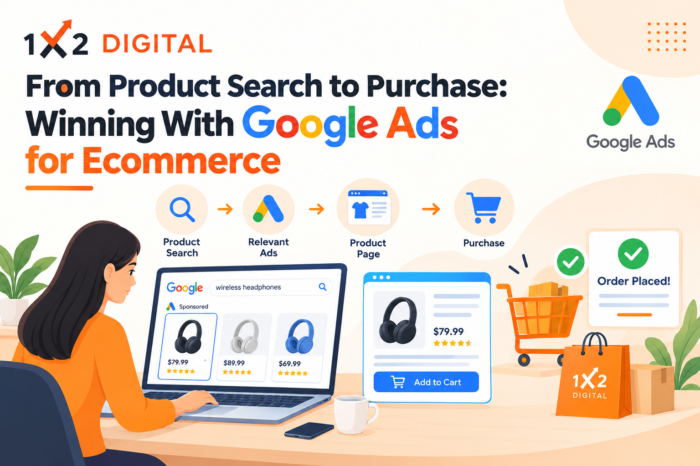
A shopper begins with a search. A relevant advertisement earns attention. The product page provides the information needed for evaluation. A smooth checkout experience makes completing the purchase easier. Performance data then helps the business understand what worked.
This connected approach is what gives Google Ads for Ecommerce its real value.
When campaigns are planned around the complete path from product discovery to purchase, ecommerce businesses can make better use of their advertising budget while creating a more relevant experience for potential customers.
FAQs
1. What are Google Ads for Ecommerce?
They are paid campaigns that help online stores promote products to relevant shoppers on Google.
2. How can Ecommerce Ads help sales?
They can connect products with shoppers who are actively searching or showing purchase intent.
3. What are Google Shopping Ads?
They are product-focused ads that can show details such as product images, names, and prices.
4. Should every product be advertised?
No. Businesses can prioritise products based on demand, margins, sales, and other commercial factors.
5. Are Ads for Ecommerce useful for small stores?
Yes. Small stores can start with selected products and controlled budgets to identify what performs best.
More from our blog
See all posts