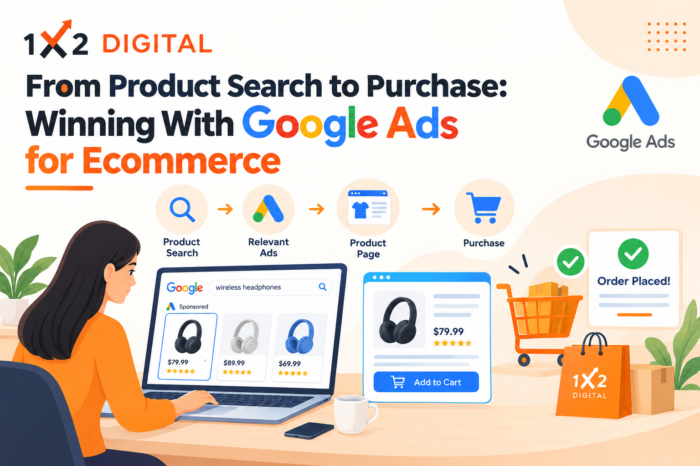
From Product Search to Purchase: Winning With Google Ads for Ecommerce
- September 16, 2026
Introduction
For an ecommerce brand, attracting visitors is only one part of the sales process. The bigger challenge is reaching people who are genuinely interested in a product and turning that interest into a completed purchase.
Google Ads for Ecommerce helps online stores reach potential customers when they are actively searching for products, comparing options, or getting closer to a purchase. A well-planned campaign can support product visibility, attract relevant visitors, and help businesses measure how advertising contributes to sales. The key is to connect the right search, advertisement, and product page while tracking results beyond clicks.
When these elements work together, paid search can become a valuable channel for measurable ecommerce growth.
Start With What Your Customers Are Searching For
Before launching a campaign, an ecommerce business needs to understand how its customers search.
A shopper looking for “wireless headphones” may still be comparing brands and features. Someone searching for a particular model may already be much closer to making a purchase. These two users have different levels of intent, so showing them the same message may not deliver the best results.
Understanding search intent helps businesses decide which searches deserve attention and which products should receive advertising budget through paid search .
It can also influence product selection, ad messaging, landing pages, targeting, budget allocation, and conversion goals.
The objective is not to attract the largest possible number of visitors. It is to attract visitors who have a meaningful reason to consider the product.
Choose Products That Have Commercial Potential
An ecommerce website can contain hundreds or even thousands of products, but that does not mean every product should receive the same advertising investment.
A better approach is to identify products that already show signs of commercial potential. Strong demand, competitive pricing, healthy margins, positive reviews, seasonal relevance, and previous sales performance can all help determine where advertising should begin.
This allows a business to test campaigns with products that have a stronger chance of generating a return.
Product information also deserves attention. Accurate product titles, high-quality images, current pricing, availability, and clear descriptions make it easier for shoppers to understand what they are considering before they click.
Make Google Shopping Ads More Effective
For ecommerce businesses, Google Shopping Ads can help products appear in front of shoppers who are searching for relevant items. Product images, titles, prices, and store information help shoppers compare options before visiting an online store.
However, running Shopping Ads successfully requires more than making products visible. Businesses comparing campaign formats can explore how Performance Max and Search campaigns differ in targeting, automation, and campaign control.
Keeping the product feed accurate and up to date is equally important. Product titles, descriptions, prices, availability, images, and landing page links should match the information shown on the online store. This helps create a consistent experience from the advertisement to the product page.
Performance should also be reviewed at the product level. If a product receives clicks but generates few purchases, check its price, product page, delivery information, stock availability, and competitiveness before increasing its budget. Shopify businesses can refer to this Google Ads guide for Shopify stores for additional guidance on product feeds, campaign setup, and conversion tracking.
The goal is not simply to generate more clicks. It is to connect relevant products with interested shoppers and make it easier for them to complete a purchase.
Match Ecommerce Ads to Customer Search Intent
Not every shopper is ready to purchase immediately. Some people are exploring a product category, while others are comparing brands or searching for a specific item. Effective Ecommerce Ads should reflect these differences in buying intent.
For example, a shopper searching for a particular product model may respond better to a product-focused advertisement with clear pricing and relevant details. Someone searching for a broader category may need more information about product features, benefits, or available options before making a decision.
Businesses should regularly review their search terms to understand which queries attract relevant visitors. For more ideas on refining audience selection and reducing irrelevant traffic, explore advanced Google Ads targeting. Irrelevant searches can waste advertising budget, so suitable negative keywords may help prevent ads from appearing for searches that do not match the products being sold.
The landing page should also match the advertisement. When a shopper clicks an ad for a specific product, taking them directly to that product page usually creates a more relevant experience than sending them to the homepage.
The aim is to show useful messages to the right audience and make the next step in the buying journey clear.
Turn the Product Page Into the Next Step of the Ad
Getting a shopper to click is not the end goal.
This makes conversion rate optimization an important part of the post-click experience. Clear product images, useful descriptions, visible pricing, delivery details, and a simple checkout process help customers make informed purchasing decisions.
Trust can be equally important. Reviews, ratings, secure payment options, and transparent policies can reduce uncertainty, particularly when customers are purchasing from a brand for the first time.
A strong product page should answer the shopper’s important questions without making them search elsewhere for basic information.
Manage Budget Based on Business Performance
A campaign can generate a large number of clicks and still fail to produce profitable results.
That is why ecommerce businesses should look beyond surface-level metrics and use ecommerce analytics to understand which campaigns and products are actually contributing to business results. Depending on their objectives, they can monitor conversion rate, cost per conversion, return on ad spend, average order value, and revenue generated from campaigns.
Performance data can help answer practical questions:
- Which products are actually generating sales?
- Which campaigns are producing a strong return?
- Which searches bring high-value visitors?
- Where are shoppers dropping out of the buying process?
- Which campaigns deserve more or less budget?
These insights make it possible to improve campaigns based on evidence rather than assumptions.
Google Ads India: Planning Campaigns for Ecommerce Brands
Ecommerce businesses targeting Indian customers need to consider more than keywords and advertising budgets. Product demand, delivery coverage, pricing, customer preferences, and competition can vary across locations and product categories.
When planning Google Ads India campaigns, businesses should make sure that advertised products are available in the locations they target and that delivery charges, estimated delivery times, payment options, and return policies are clearly explained on product pages. These details can influence whether a shopper feels confident enough to complete a purchase.
Campaign performance should also be reviewed across relevant locations, products, and search terms. If certain areas generate clicks without meaningful sales, businesses can investigate delivery limitations, pricing, audience relevance, or the product-page experience before making budget changes.
Seasonal promotions and major shopping periods may create additional opportunities, but campaigns should be planned around actual product demand, available stock, and realistic profit margins.
Bring Back Shoppers Who Did Not Purchase
Not every customer completes a transaction on the first visit.
A shopper may leave because they want to compare prices, think about the purchase, or simply get distracted. Losing the first visit does not necessarily mean losing the customer permanently.
Remarketing can help ecommerce businesses reconnect with eligible users who have previously interacted with their products or website.
For example, someone who viewed a product without purchasing may later see a relevant reminder. This keeps the product within consideration without requiring the customer to start the search journey again.
When an Ecommerce Advertising Agency Can Make a Difference
A well-planned ecommerce advertising strategy connects product selection, campaign targeting, budget allocation, conversion tracking, and ongoing optimisation. The right approach depends on the business’s products, margins, target customers, and growth objectives.
As an ecommerce business grows, advertising management can become increasingly complex. Businesses looking for the best digital marketing agency in Ahmedabad should consider its experience with ecommerce advertising, understanding of customer behaviour, and ability to manage campaigns based on measurable business outcomes.
Multiple product categories, changing demand, seasonal campaigns, different customer segments, budget decisions, conversion tracking, and ongoing optimisation all require attention.
An Ecommerce Advertising Agency can help businesses manage these areas through structured campaign planning, testing, optimisation, and performance analysis. For businesses targeting the local market, a Digital Marketing Agency in Rajkot can also help connect relevant products with shoppers searching online.
A strong partner should understand the business model, product catalogue, target customers, margins, conversion journey, and growth objectives rather than relying on a standard campaign template.
Use Advertising Data to Understand Your Customers Better
One of the most useful benefits of paid advertising is the data it generates.
Campaign performance can reveal which products attract attention, which searches indicate stronger buying intent, which audiences convert, and where customers lose interest, while GA4 predictive metrics can provide additional insight into likely customer behaviour.
These insights can support decisions beyond advertising.
For example, an ecommerce business may discover that a particular product category receives strong demand but has a weak conversion rate. That finding could encourage the business to review pricing, product information, customer reviews, stock availability, or the overall shopping experience.
In this way, advertising data can become a source of useful business insight rather than simply a reporting metric.
Connect Every Stage of the Buying Journey
The strongest ecommerce advertising strategy does not treat search, advertising, and conversion as separate activities.
A shopper begins with a search. A relevant advertisement earns attention. The product page provides the information needed for evaluation. A smooth checkout experience makes completing the purchase easier. Performance data then helps the business understand what worked.
This connected approach is what gives Google Ads for Ecommerce its real value.
When campaigns are planned around the complete path from product discovery to purchase, ecommerce businesses can make better use of their advertising budget while creating a more relevant experience for potential customers through a data-driven Google Ads strategy.
Frequently Asked Questions
1. How can I increase my e-commerce sales?
You can increase ecommerce sales by promoting products with strong demand, improving product pages, offering clear pricing and delivery information, and making checkout easier. Review sales data and customer feedback regularly to identify what may be preventing shoppers from completing their purchases.
2. How to set up Shopping Ads?
To set up Google Shopping Ads, create a Google Merchant Center account, upload your product feed with accurate titles, images, prices, and availability, and link it to your Google Ads account. Then create a Shopping campaign, set your budget and targeting, and track conversions to measure sales and improve performance.
3. How to attract customers using Google Ads?
To attract customers using Google Ads, choose relevant keywords, write clear ad copy, and direct users to landing pages that match their searches. Use negative keywords to reduce irrelevant traffic and track conversions to understand which campaigns bring valuable visitors.
4. Do Google Shopping Ads actually work?
Yes, Google Shopping Ads can help ecommerce businesses attract shoppers who are actively searching for products. They display product details such as images, prices, and names, helping customers compare options. Results depend on product demand, pricing, targeting, product feed quality, and landing page experience. Regularly tracking purchases and advertising costs helps improve campaign performance.
5. What are e-commerce ads?
E-commerce ads are online advertisements that help businesses promote their products and attract potential customers. They can include Google Search Ads, Google Shopping Ads, and remarketing campaigns. These ads help online stores reach relevant shoppers, increase product visibility, and encourage purchases.
More from our blog
See all posts