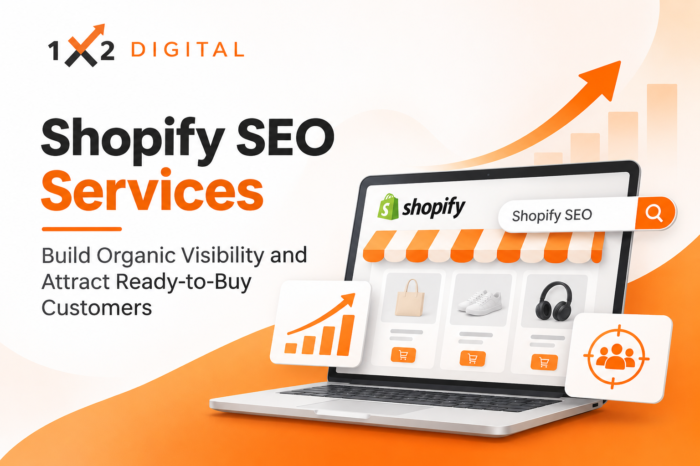
Shopify SEO Services: Build Organic Visibility and Attract Ready-to-Buy Customers
- September 30, 2026
Introduction
A Shopify store can have excellent products, competitive prices, and a smooth checkout experience, yet still struggle to attract customers from Google. The reason is often not the products themselves but how easily shoppers can discover them through search.
When customers cannot find your store while researching or comparing products, they may end up purchasing from competitors with stronger search visibility. For ecommerce businesses, this creates a missed opportunity to reach people who are already interested in what they sell.
Shopify SEO Services help businesses improve how their stores appear in organic search and how potential customers discover relevant products. Instead of focusing only on rankings, a practical SEO strategy considers the complete shopping journey, from the first search to product discovery and purchase.
This guide explains how Shopify store owners can identify search visibility gaps, improve product discovery, and build a sustainable organic growth strategy.
Why Your Shopify Store May Be Missing Valuable Search Opportunities
A store can have hundreds of products and still miss important searches if its pages do not match what customers are looking for.
Understanding these gaps is the first step toward improving organic visibility.
Your Products May Be Difficult to Discover
Customers do not always search using the exact product names listed in your catalogue. They may search by purpose, material, size, occasion, or a specific problem they want to solve.
For example, someone looking for storage furniture might search for “space-saving shoe cabinet for apartment” rather than a manufacturer’s product name.
If your store does not provide a relevant page for that search intent, potential customers may never discover your products.
Your Store May Have Pages That Compete With Each Other
Stores sometimes create multiple pages targeting nearly identical search terms. This can happen through overlapping collections, product variants, or duplicated content.
When several pages serve the same purpose, it may become harder to maintain a clear site structure and identify which page should attract a particular search.
A well-organized SEO strategy assigns a distinct purpose to important pages and connects them through useful internal links.
Your Organic Traffic May Not Match Your Business Goals
More visitors do not automatically mean more sales.
A store attracting broad informational traffic may receive many visits from people who are not ready to purchase. Meanwhile, relevant product searches may remain underdeveloped.
The objective should be to attract visitors whose needs match your products, pricing, and delivery capabilities.
What Professional Shopify SEO Services Should Improve
A successful SEO strategy should address the specific obstacles preventing customers from discovering and evaluating your products.
1. Search Opportunity Mapping for Your Product Catalogue
Keyword research becomes more useful when it is connected to your actual inventory and business priorities.
A Shopify SEO Agency may begin by examining your product range, customer questions, competitor visibility, and search demand to identify relevant opportunities.
The research should distinguish between:
- Searches indicating a clear intention to purchase.
- Searches used to compare products or understand features.
- Searches related to a specific brand or product model.
- Searches that are irrelevant to your catalogue or business.
This helps prioritize pages that have a realistic opportunity to attract relevant customers.
2. Improve Product Discovery Through Better Site Architecture
Your website structure should help both shoppers and search engines understand how products relate to one another.
For example, a home decor store might organize its catalogue into:
- Home decor
- Wall decor
- Lighting
- Decorative accessories
- Furniture
- Living room furniture
- Bedroom furniture
- Storage solutions
Each important category should have a clear purpose and a logical relationship with its products.
A thoughtful structure reduces unnecessary navigation steps and makes it easier for shoppers to explore related items.
3. Create Product Pages That Answer Purchase Questions
Product pages should help customers evaluate whether an item meets their requirements.
Beyond the product name and basic description, consider including:
- Accurate dimensions and specifications.
- Materials, ingredients, or compatibility details.
- Product usage and care instructions.
- Available options and variations.
- Shipping, returns, and warranty information where applicable.
- Original photographs that clearly represent the item.
A useful description explains what makes the product relevant to the customer instead of repeating generic supplier information.
4. Strengthen Collection Pages for Category-Level Searches
Collection pages are often important entry points for shoppers searching for a product category.
A useful collection page should have a descriptive heading, relevant products, clear filters, and concise supporting information where it helps customers understand the category.
For example, a store selling fitness equipment could develop a dedicated collection for resistance bands and explain the different types available, their uses, and important selection considerations.
This creates a better experience than sending every category-related search to the homepage.
Shopify SEO Optimization for a Better Shopping Experience
Shopify SEO Optimization should connect search visibility with usability. Customers need to find the right products, understand their options, and navigate the store without unnecessary friction.
Make Mobile Product Browsing Easier
Many shoppers browse ecommerce stores on mobile devices. For more guidance on store structure, usability, and development, explore our Shopify website development guide. If product images are difficult to view, menus are confusing, or important buttons are hard to use, visitors may leave before exploring the catalogue.
Review your store on different screen sizes and check:
- Whether product information is readable without excessive zooming.
- Whether filters and sorting controls work properly.
- Whether product variants are easy to select.
- Whether the cart and checkout process are straightforward.
Improving these elements supports the customer experience while helping your business make better use of its organic traffic.
Improve Page Performance Without Sacrificing Product Quality
Product images are essential in ecommerce, but oversized files and unnecessary scripts can affect page loading.
Useful performance improvements may include compressing images, using appropriate image dimensions, removing unused applications, and reviewing third-party scripts.
Prioritize changes based on actual performance measurements rather than removing useful features simply to achieve a particular score.
Use Structured Data Accurately
Structured data can help search engines interpret information about products, prices, availability, and reviews when the relevant data is present and eligible.
Check that product markup reflects what customers can actually see on the page. Incorrect or outdated structured data can create inconsistencies.
Structured data does not guarantee enhanced search results, but accurate implementation can help search engines understand product information.
Search Engine Optimization Shopify: Turning Search Demand Into a Content Plan
Search Engine Optimization Shopify strategies should connect different customer questions with the most appropriate page.
A product page is not always the best answer to an informational search. Likewise, a blog article may not be the best destination for someone ready to purchase.
Build Content Around the Customer’s Buying Journey
Consider a store selling reusable water bottles.
A potential customer might move through several stages:
| Customer search | Search intent | Suitable content |
| How to choose a reusable water bottle | Research | Buying guide |
| Stainless steel vs. glass bottle | Comparison | Comparison article |
| Insulated stainless steel bottle | Product discovery | Product collection |
| Buy 1-litre insulated bottle | Purchase | Product page |
This approach gives each page a distinct role and reduces unnecessary overlap between articles, collections, and products.
Use Helpful Articles to Support Product Categories
Blog content should answer genuine questions that customers have before purchasing.
For example, a clothing store could publish a guide explaining how to choose breathable fabrics for warm weather. The article can naturally link to relevant collections when those products help readers.
Avoid creating multiple articles that answer essentially the same question with slightly different keywords. A stronger content plan focuses on distinct topics and useful information.
How a Shopify SEO Company Can Help With Complex Store Challenges
As a store grows, SEO may involve more than updating titles and descriptions. Large catalogues, changing inventory, multiple markets, and technical issues can require specialized attention.
A Shopify SEO Company may help organize and prioritize work such as:
Managing Large Product Catalogues
Stores with many products need a consistent approach to product information, collection organization, internal linking, and page maintenance.
Prioritizing high-value categories and products can make optimization more manageable than trying to update every page at once.
Resolving Indexing and URL Issues
Shopify generates useful technical elements, including XML sitemaps and canonical tags. However, store owners should still check whether important pages are discoverable and whether unnecessary URLs are creating problems.
A technical SEO audit can help investigate indexing status, duplicate URLs, broken links, redirects, and other technical concerns.
Supporting Store Expansion
Businesses entering new regions or expanding their product range may need additional collection pages, localized content, or changes to site navigation.
The right approach depends on the store’s actual markets, language requirements, and operational capabilities.
Shopify SEO Agency vs. In-House SEO: Which Approach Is Right?
The decision to manage SEO internally or work with an agency depends on your store’s complexity, available expertise, and business priorities.
| Consideration | In-house SEO | Agency support |
| Daily store knowledge | Direct access to internal teams | Requires collaboration |
| Specialist resources | Depends on internal capabilities | May provide broader expertise |
| Workload | Managed by your team | Some tasks can be delegated |
| Prioritization | Internal planning | Depends on the agency’s process |
| Reporting | Created internally | Depends on agreed deliverables |
A small store with a limited catalogue may be able to manage foundational SEO internally. A growing store with technical challenges or a large inventory may benefit from additional specialist support.
When evaluating agencies, ask for a clear scope of work, realistic timelines, reporting standards, and relevant examples of previous work.
How to Measure the Business Impact of Shopify SEO
SEO performance should be evaluated using both search visibility and business outcomes.
Monitor Search Performance
Google Search Console can help you review:
- Search queries generating impressions and clicks.
- Organic click-through rates.
- Pages gaining or losing visibility.
- Search performance over time.
These insights can help identify pages that need better content, clearer titles, or more relevant targeting.
Connect Organic Visits With Ecommerce Results
Use eCommerce analytics to understand what visitors do after arriving from organic search.
Review metrics such as:
- Organic product and collection visits.
- Add-to-cart activity.
- Purchases attributed to organic search.
- Organic revenue and conversion trends.
- Performance of important landing pages.
If organic traffic increases but sales remain unchanged, investigate product relevance, pricing, shipping information, page usability, and checkout friction.
If impressions increase but clicks remain low, review the search queries and how your page titles and descriptions communicate relevance.
These measurements help you decide what to improve next instead of relying on rankings alone.
Common Shopify SEO Problems That Deserve Early Attention
Some store issues can affect many pages at once. Identifying them early can prevent wasted optimization effort.
Duplicate or Low-Value URLs
Review URLs created by filters, parameters, and overlapping collections. Determine which pages provide useful independent value and which require technical handling.
Discontinued Products
When a product is no longer available, consider whether it will return, whether a replacement exists, and whether the page has useful search or customer value.
The appropriate action may differ between products, so avoid automatically redirecting every unavailable item to the homepage.
Inconsistent Product Information
Check that product names, descriptions, prices, availability, and structured data remain accurate.
Unhelpful Internal Links
Internal links should guide visitors toward relevant products, categories, and supporting information. Avoid adding links that do not help the reader or clarify the site structure.
Choosing SEO Support for Your Shopify Store
If you need professional assistance, evaluate providers according to the problems they can solve and how clearly they explain their process.
Businesses comparing a digital marketing agency in rajkot or searching for the best digital marketing agency in Ahmedabad should consider:
- Experience with ecommerce and Shopify stores.
- Ability to explain technical issues in clear language.
- A practical strategy based on store-specific research.
- Transparent reporting and deliverables.
- Relevant examples or verifiable case studies.
- Realistic expectations without guaranteed ranking promises.
At 1into2, Shopify SEO can be considered alongside ecommerce SEO, content marketing, and conversion rate optimization, depending on your store’s requirements.
The most appropriate strategy is the one that addresses your actual business challenges rather than offering a generic checklist.
Final Thoughts
Building organic visibility for a Shopify store requires more than adding keywords to product descriptions. It involves helping search engines understand your pages and helping customers discover products that genuinely match their needs.
A focused SEO strategy can improve product discovery, strengthen your store’s information structure, and attract more relevant search visitors.
Start by identifying your most important products and the searches your customers use to find them. Improve those pages, monitor the results, and expand your strategy based on what the data reveals.
Want to identify the biggest SEO opportunities in your Shopify store? Contact 1into2 to discuss your ecommerce goals and explore a strategy suited to your business.
Frequently Asked Questions
1. Which SEO Tool Is Best for Shopify?
The best SEO tool for Shopify depends on your requirements. Google Search Console helps monitor search impressions, clicks, and indexing, while tools such as Semrush and Ahrefs support keyword research and competitor analysis. Shopify SEO apps can also help with specific optimization tasks, but tools should support a clear SEO strategy rather than replace it.
2. Does Shopify Include SEO Features?
Yes, Shopify includes basic SEO features such as editable page titles and meta descriptions, automatic XML sitemaps, and canonical tags. However, improving search rankings still requires keyword research, content optimization, and ongoing SEO work.
3. How Do I Do SEO on Shopify?
To improve Shopify SEO, research relevant keywords, optimize product and collection pages, write unique product descriptions, and use descriptive image alt text. You should also improve internal linking, review technical SEO issues, and monitor results through Google Search Console.
4. Does Shopify Automatically Optimize My Store for Search Engines?
Shopify handles some technical SEO tasks automatically, but it does not complete your entire SEO strategy. You still need to optimize page content, target relevant keywords, improve site navigation, and address any indexing or performance issues.
5. How Good Is Shopify for SEO?
Shopify provides a useful foundation for SEO with built-in features and customizable page content. However, search performance depends on content quality, keyword targeting, technical health, competition, and how effectively product and collection pages meet customer needs.
More from our blog
See all posts